When Perception Becomes the Problem: Ego, Hidden Assumptions, and the Economics of a Day.
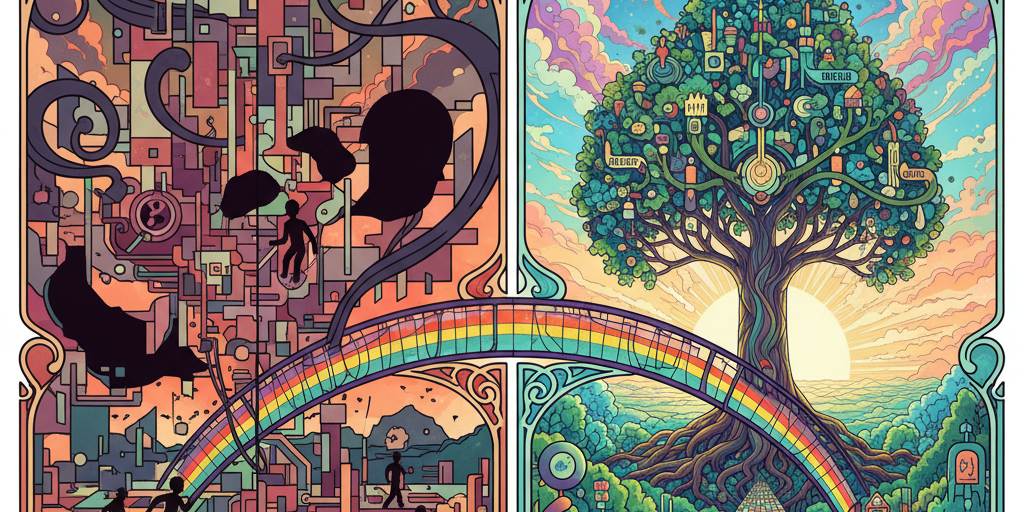
A diagnosis of how unexamined assumptions and ego quietly erode meaning and results and a compact, measurable protocol to stop the drift. Four practical moves to name daily outputs, map cognitive blind spots, reintroduce creative practice, and begin measurable change in thirty days.
Are you building a life you truly want, or just endlessly running from your own blind spots?
If the way you spend today were judged five years from now, what would it be accused of timidity, waste, or cowardly conformity?
What if the way you're seeing the world right now is costing you everything that truly matters?
The Unexamined Day and Cognitive Blindness
We are masters of the examined task, but not the examined life. We meticulously choose a career, start a business, or climb a ladder, all in the name of a "day well spent." We tell ourselves we are solving problems, showing our skill, or finding security. But too often, we are simply filling the day, playing it safe, or pleasing the boss. We operate under the illusion that our perception is the complete picture.
The truth is, we are all functioning with massive blind spots. These areas where our unique way of thinking prevents us from seeing things as they are. Like a person who cannot see color, we are fundamentally unaware of what we cannot perceive. This isn't a minor flaw; it's a formidable barrier that walls us off, not just from new possibilities, but from the very people who could show them to us.
Most people pick jobs, projects, and routines with no clear answer to a single question: what should a day well spent actually produce? We fill calendars without pausing to name the output we want.
At the same time, two invisible brakes reduce our clarity: ego and blind spots. Ego convinces you your map is complete; blind spots hide entire territories of risk and opportunity. The result is steady motion that feels productive but is directionless. You keep doing things that look like progress while the important patterns you cannot see quietly dictate failure.
You're grinding through days filled with safe choices: chasing promotions that promise security, ticking off tasks to please the higher-ups, or just surviving the routine without questioning its purpose.
It feels stable, even productive, but beneath it all lurks a silent thief: those invisible gaps in how you think, the ones that make you miss the big picture while obsessing over details, or trap you in linear paths when wild leaps could unlock breakthroughs.
Like a colour-blind artist painting in shades they can't fully grasp, you overlook patterns others spot effortlessly, leading to decisions that feel right but repeatedly fall short, leaving you isolated in your own head, disconnected from the richer insights swirling around you.
Costs and Consequences: How Blindness and Ego Compound Loss
This closed-mindedness is terribly costly. It causes us to spin in our own heads, perpetually crashing into the dangers we are blind to while wonderful opportunities pass us by unseen. We enter disagreements convinced of our own correctness, unable to fathom how another intelligent person could reach an opposite conclusion.
This illogical stance leads to anger, broken relationships, and disastrously suboptimal decisions. Aristotle defined tragedy as a terrible outcome born from a person’s fatal flaw. For so many intelligent, hardworking people, this is it: an ego that refuses to be wrong and blind spots that we refuse to see. It’s the slow, quiet tragedy of a life lived at a fraction of its potential, all because we are too preoccupied with telling the world what we think to ever truly listen.
This is not theoretical. When you refuse to interrogate purpose and refuse to inspect what you cannot see, small errors compound. Decisions that would have been corrected early calcify into sunk costs. Creative impulses get muted by discipline misapplied; partnerships fracture because everyone insists they’re right; promising ideas die because no one sought disconfirming evidence.
Emotionally, it breeds frustration: expertise without insight, busyness without meaning, the slow burn of potential unfulfilled. The longer you ignore these twin problems, the higher the price, lost opportunities, damaged relationships, and a life that, in private, feels thin.
This oversight doesn't just stall progress; it erodes your core, turning potential allies into adversaries as egos clash and misunderstandings fester into resentment. You spin in endless loops, crashing into the same unseen walls, the missed opportunities, fractured relationships, a gnawing loneliness that no crowd can fill while the clock ticks away on a life half-lived.
Imagine the quiet rage of realising years wasted on revenge fantasies or status games that leave you hollow, or the suffocating weight of hiding your true self to avoid rejection, only to wake up one day forgotten, like a monarch whose vast empire dissolved into irrelevance overnight. The toll mounts: drained energy, stifled growth, a soul scarred by what could have been, until authenticity feels like a luxury you can't afford.
A Practical Reframing: Symbiosis, Inspection, and Creative Repair
The escape from this cycle doesn't come from forcing our brains to work in a way they weren’t designed for. The breakthrough is realising that our differences in thinking don’t have to be disruptive, they can be profoundly symbiotic.
The key lies in developing an odd negotiating ability between people, an intimacy that comes from truly seeking to understand a perspective you cannot natively see. It’s a creative act, one that allows us to find solace and inspiration in the creations and thoughts of others.
This approach heals wounds, but more importantly, it reveals that not all wounds need healing and not all scars are ugly. It is the simple, radical act of relying on the help of others who are strong where we are weak, and trading our stubborn self-reliance for a shared, more complete vision.
Change begins with three deliberate moves. First, name the desired outcome for a single day. What does “well spent” look like for you? Make it concrete: teaching, building an asset, solving a problem, or simply showing up to practice a craft.
Second, treat your thinking as fallible: map your blind spots and build compensations: structured feedback, disciplined reminders, and collaborators whose strengths counter your weaknesses.
Third, reclaim creative practice as a tool for intimacy and repair. Use art, solitude, and small experiments to process loneliness, rehearse hard choices, and surface hidden patterns.
Finally, accept that authenticity will cost social approval sometimes; it’s a price smaller than the cost of living as a counterfeit version of yourself. These moves together form a simple, repeatable strategy: define purpose, inspect limits, create deliberately, and choose yourself.
Recognise those mental blind spots not as flaws to hide, but as invitations to borrow strength from others. Pair your detail-driven mind with a visionary's sweep, your emotional fire with cool logic, turning differences into a powerhouse alliance.
Lean into creative outlets that bridge the gaps, like art that whispers intimacy across strangers' lives, revealing that some wounds heal by staying open, some scars add fierce beauty. And in that raw honesty, dare to be unliked if it means being real because faking it chains you tighter than any criticism ever could.
Vision and Tactical Start: Permission to Be Real, Four Actions to Begin
Imagine a future free from the desperate need to be right, liberated from the fear of what others think. The most powerful people on earth are eventually forgotten. No matter how big you build, no matter the status you find or the profit you maximise, you will die, and the world will move on.
This isn't a depressing thought; it’s the ultimate permission slip. It frees you to stop hiding. It liberates you from the crippling weight of living for someone else’s approval. Yes, it sucks to not be liked. But it sucks more to not be yourself. The only path forward is to abandon the unexamined day.
Stop playing it safe. Have the courage to look for what you can’t see and the humility to accept it when it's shown to you. Build an asset, change the culture, share smiles, thrive. Do what you want.
Imagine a week where each day produces something you can point to: a lesson taught, a problem reduced, a habit strengthened, or one small piece of value added to a longer game. Decisions become clearer because you have a yardstick. Teams stop arguing to be right and start arguing to be less wrong. Loneliness becomes fertile ground for work that connects. And you sleep knowing you lived rather than merely survived.
Start now with four short actions this week:
- Write a one-line definition of what a day well spent produces for you.
- Ask two people to name one thing you consistently miss; record and reflect.
- Block three 45-minute creative sessions—no email, only making or thinking.
- Do one small, authentic thing you would have avoided because you wanted to be liked.
Do these for a month. If you’re honest and persistent, you will stop drifting and you will begin to build a life that actually answers the first question you were asked.
Picture a life reordered: days pulsing with purpose, where you lead with skill, solve intriguing puzzles, right injustices, and explore uncharted edges, building assets that endure and cultures that evolve.
Loneliness transforms into fertile ground for deep connections, smiles shared freely, growth that thrives on symbiosis rather than solo struggle. You'll thrive not by playing safe or filling hours, but by changing the game, emerging stronger, more alive.
Grab a journal, map your unseen barriers, seek out a complementary voice to challenge yours, and commit to one bold, authentic act today. Your untapped world awaits; step into it before another moment slips away.
The Essential Concepts
Perception Becomes the Problem: The article argues that we are masters of the examined task but not the examined life. We operate under the illusion that our perception is the complete picture, but we are all functioning with massive blind spots. This is compounded by our ego, which convinces us our map is complete. The result is "steady motion that feels productive but is directionless," leaving us unable to see opportunities or fathom how other intelligent people could reach opposite conclusions.
The Tragedy of Unfulfilled Potential: This cognitive blindness and the refusal of the ego to be wrong are described as the quiet tragedy of a life lived at a fraction of its potential. Small, uncorrected errors compound, decisions calcify into sunk costs, and creative impulses are muted. Emotionally, this breeds frustration, as we have expertise without insight and busyness without meaning. The ultimate cost is a life that is thin because we are too preoccupied with telling the world what we think to ever truly listen.
Symbiosis and Creative Repair: The escape from this cycle is not to fight our brains, but to realise that our differences in thinking can be profoundly symbiotic. The solution is to trade stubborn self-reliance for a shared, more complete vision. This involves a creative act: truly seeking to understand a perspective you cannot natively see. The ultimate realisation is that since you will eventually be forgotten, you have the ultimate permission slip to stop hiding and live authentically.
The Thirty-Day Protocol for Change: The article provides a compact, measurable protocol of four actions to stop the drift and begin measurable change:
- Define Purpose: Write a one-line definition of what a day well spent produces for you (e.g., teaching, building an asset, solving a problem).
- Map Blind Spots: Ask two people to name one thing you consistently miss; record and reflect on their answer.
- Reclaim Creative Practice: Block three 45-minute creative sessions this week—no email, only making or thinking.
- Choose Authenticity: Do one small, authentic thing this week you would have previously avoided because you wanted to be liked.
I am a Knowledge Worker...
What does it mean for me?
The essay argues that your "busy" day is likely "steady motion that feels productive but is directionless" because perception has become the problem.
Your ego convinces you your map is complete, while your blind spots hide entire territories of risk or opportunity within your role or department.
This is the quiet tragedy of unfulfilled potential: you have expertise without insight and your uncorrected errors are compounding into sunk costs, fracturing relationships with colleagues who see things differently.
The solution is not to work harder, but to embrace symbiosis and creative repair by actively seeking perspectives that counter your cognitive weaknesses, moving from a life lived for others' approval to one of clear, measurable purpose.
How do I action this?
- Define Your Day's Purpose (The One-Line Rule): Immediately write down a one-line definition of what a day well spent must produce for your career growth. Frame it as a tangible output, not an activity (e.g., "A day well spent produces one piece of long-term asset for the company/my career," or "A day well spent solves one structural problem").
- Map Your Cognitive Blind Spots: This week, ask two trusted colleagues (one senior, one peer) this specific question: "What is one thing you think I consistently miss or don't see in our work?" Map Blind Spots by recording their answers without defending yourself, and commit to inspecting their feedback.
- Reclaim Creative Practice: Block three separate 45-minute sessions on your calendar this week. Treat them as non-negotiable Creative Repair time. During these blocks, engage in deep, non-work thinking or making—no email, no meetings, just sketching, reading, or journaling to surface hidden patterns.
- Choose Authenticity over Conformity: Identify one small thing you would typically avoid doing or saying at work because you want to be liked (e.g., politely challenging a flawed assumption in a meeting, or admitting you need help). Do that authentic thing this week.
I am a Freelancer, Solopreneur, Entrepreneur, Independent Worker...
What does it mean for me?
The essay argues that your "busy" day is likely "steady motion that feels productive but is directionless" because perception has become the problem.
Your ego convinces you your map is complete, while your blind spots hide entire territories of risk or opportunity within your business model or market.
This is the quiet tragedy of unfulfilled potential: you have expertise without insight and your uncorrected errors are compounding into sunk costs, fracturing relationships with collaborators who see things differently.
The solution is not to work harder, but to embrace symbiosis and creative repair by actively seeking perspectives that counter your cognitive weaknesses, moving from a life lived for others' approval to one of clear, measurable purpose.
How do I action this?
- Define Your Day's Purpose (The One-Line Rule): Immediately write down a one-line definition of what a day well spent must produce for your business. Frame it as a tangible output, not an activity (e.g., "A day well spent produces one piece of long-term asset for the business," or "A day well spent solves one bottleneck problem for clients").
- Map Your Cognitive Blind Spots: This week, ask two trusted clients or professional peers this specific question: "What is one thing you think I consistently miss or don't see in my business/product strategy?" Map Blind Spots by recording their answers without defending yourself, and commit to inspecting their feedback.
- Reclaim Creative Practice: Block three separate 45-minute sessions on your calendar this week. Treat them as non-negotiable Creative Repair time. During these blocks, engage in deep, non-work thinking or making—no email, no client calls, just sketching, reading, or journaling to surface hidden business patterns.
- Choose Authenticity over Conformity: Identify one small thing you would typically avoid doing or saying with a client because you wanted to be liked (e.g., politely declining a low-value request, or clearly stating your premium pricing). Do that authentic thing this week.