The Social Proof Economy: Stasis by Consensus (And How a Minute of Curiosity Could Save It).
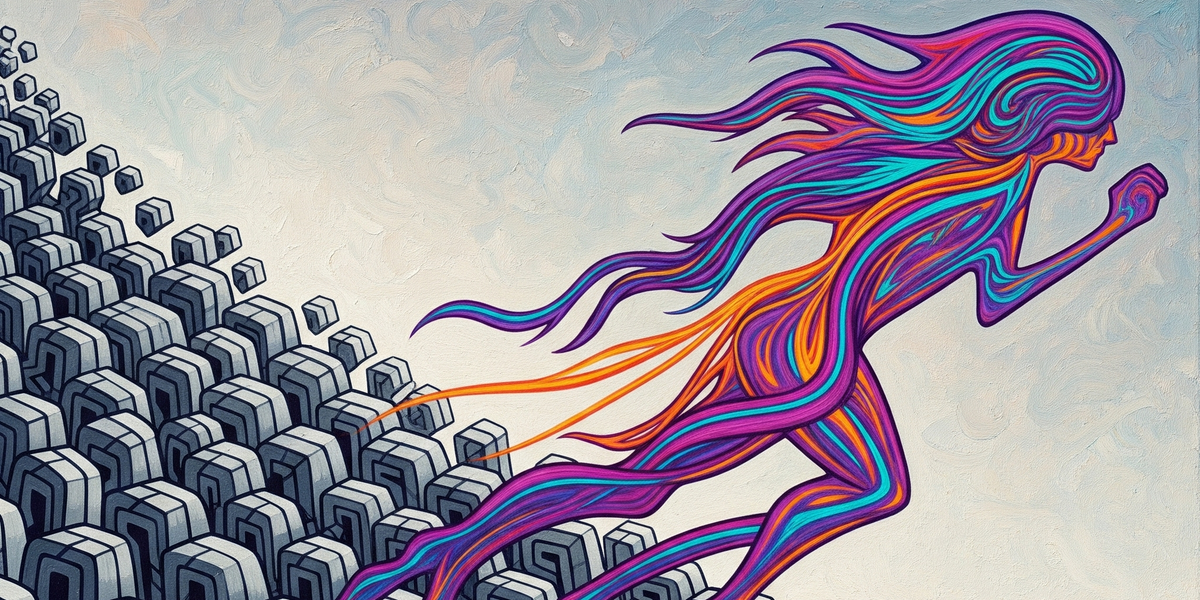
The real obstacle to growth isn’t time or access. It’s the small, repeated choice not to change. This essay diagnoses how group comfort calcifies into missed opportunity and shows a simple practice to start unfreezing your curiosity.
What truth would you finally admit if admitting it meant you had to change?
What if the biggest obstacle to your growth isn't a lack of opportunity, but a quiet, unacknowledged refusal to seize it?
Why do we whisper "good enough" to ourselves when we know deep down it's a lie?
The Crowd Comfort (and its cost)
We find a strange comfort in the crowd. There’s a deep, instinctual pull to seek safety in numbers, to look around and see others walking the same path, confirming our choices. This instinct for social guidance creates cohesive cultures and teams, but it also compels us to march confidently toward a cliff's edge, simply because everyone else is.
Meanwhile, the paths to genuine improvement are all around us: the skills that would earn us a better job, the new mental frameworks that would get us unstuck, the historical context that would make us better citizens. They are more accessible than ever, often free, with no one to judge our first steps.
But we hesitate. We hesitate because learning requires effort. Because once we learn something, we might have to change our minds, and shifting our entire worldview is deeply unsettling. Change feels like a risk we’re not willing to take.
We tell ourselves we’re busy, not stuck. We prefer shortcuts, the comfort of familiar apps, habits that reward ease over mastery. That quiet choice not to learn what actually shifts outcomes, looks harmless until it isn’t.
The Price of Preserved Certainty
When you refuse the hard lessons (statistics that sharpen decisions, a new language that opens a career, frameworks that stop you repeating the same mistakes), you preserve certainty at the cost of possibility.
Meanwhile, everyone around you validates the same small moves; safety in numbers muffles the nagging question: is this working for me or just for the group?
Picture this: you're cruising through days on autopilot, dodging stats that could sharpen your choices or AI tricks that could supercharge your output. It's easier to skip that new coding language promising a career leap, or ignore creativity hacks that bust through blocks. We flock together like ants in a line, mimicking the crowd's moves, even when they're marching off a cliff, because standing out feels exposed.
And those nagging doubts? We tally them up obsessively, overlooking the wins that prove we're capable of so much more. This swarm mentality breeds silent regret, where bold questions go unasked, and potential simmers untapped beneath a veneer of safety.
The Herd as a Trap (stage one)
This hesitation isn't passive; it's an active theft of our future. The comfort of the group curdles into the anxiety of stagnation. We tell ourselves we are being prudent, but we are choosing to remain vulnerable.
While we stand still, counting our troubles and justifying our inaction, the world transforms without our consent. The tools that could make us more productive, the insights that could make us more effective, and the strategies that could help us make a real difference are adopted by others.
The perceived safety of the herd becomes a trap, a shared agreement to ignore the escalating cost of staying put. And the price of staying put is everything you could have become.
Indecision and vanity compound. Small, avoidable errors become reputations. Jobs wither into routines; opportunities slide by because learning felt risky. The comforting mirror of social proof, of “everyone’s doing it”, turns into a velvet trap: you feel protected while your skills atrophy. You count the wrong things: the hours you survived, the likes you gathered. You forget to count the wins you could have had. “Close your eyes, think of all the times you got it right,” and ask why you never celebrated those enough to repeat them.
The Rot of Staying Put (stage two)
That hesitation festers into full-blown paralysis. Every ignored shortcut piles on wasted hours; every unlearned skill locks doors to breakthroughs, leaving you watching others surge ahead while frustration boils inside.
The risk of change pales against the rot of staying stuck. Minds calcify, decisions falter, and that unsettled churn in your gut? It morphs into resentment, a quiet thief of joy stealing from what could be. We're not just missing tools; we're eroding our edge, one comfortable excuse at a time, until the crowd's echo drowns out our own voice entirely.
From Answers to Questions (the pivot)
For years, we've been conditioned to believe that value lies in having the right answers. We hunt for them, defend them, and feel secure when we possess them. But this is the very mindset that keeps us locked in place.
The breakthrough comes when we realise that great answers are a poor indicator of future success. The true catalyst for growth, the weapon against stagnation, is the thoughtful question. The shift from certainty to curiosity is the only escape.
A great question is a declaration of independence from the need to be right. It’s an admission that the current map is insufficient and a commitment to exploring new territory. Smart people don’t have all the answers; they have the most courageous and insightful questions.
Start by admitting a single honest sentence: “I don’t want to learn X.” The admission is the lever. Replace certainty with curiosity. Hunt for people who ask better questions than they give answers and copy their habit: one incisive question per week, not a parade of opinions.
Treat social proof like a tool, not a default. Follow the crowd when it amplifies wisdom, resist it when it simply comforts.
Make tiny investments: fifteen minutes of focused learning, one experiment a month, a “what I was wrong about” note you actually keep. These rituals are the simple weapons people overlook.
The sharpest minds aren't answer-hoarders, but relentless questioners probing the unknown. Admit it, the real hurdle isn't the grind, it's mustering the guts to dive in, to flip the script from crowd-follower to trailblazer.
Embrace the unease of rethinking, and suddenly, learning isn't a chore. it's the act that cracks open doors you've missed or didn't see.
A Vision of Curious Practice
Imagine a reality where your primary measure of progress isn't the number of problems you’ve solved, but the quality of the questions you're asking.
This is a future liberated from the tyranny of the 'right answer,' where you stop obsessively counting your troubles and start acknowledging the times you got it right. It’s a space where changing your mind isn't a failure but a victory.
Imagine waking up with a habit of asking, not asserting. Decisions become clearer. Mistakes shrink because you see them sooner. Your work feels less like treading water and more like building a path. Joys multiply because you start counting them.
Emerging unbounds: decisions crisp and confident, work amplified by AI savvy, ideas flowing freely without the herd's drag. You'll savour the rush of independence, tallying joys over setbacks, turning potential into power that reshapes your world.
No more shadows of regret, just a life electrified by possibility. This is not a distant dream; it begins with a single, deliberate act of intellectual bravery.
So, here is your first step: Close your eyes. Forget the crowd. Forget the risk. And ask one truly honest question about the work you do or the life you lead. Not a question you already have the answer to. A question that makes you just a little uncomfortable. That is where the new world begins. Write the one thing you’re avoiding learning, then schedule a single 15-minute block this week to begin. Ask one bold question of someone smarter than you.
Do that, and the rest becomes inevitable.
The Essential Concepts
The Trap of "Crowd Comfort": We have a deep instinct for social proof, seeking safety and validation in the choices of the crowd. This can lead to a "swarm mentality" where we march confidently toward a cliff's edge simply because everyone else is. This instinct for comfort and a fear of change leads us to hesitate and accept "good enough" over genuine improvement, preserving a fragile certainty at the cost of possibility.
The High Price of Stagnation: This hesitation is an "active theft of our future" that festers into a "full-blown paralysis." The perceived safety of the herd becomes a trap, a shared agreement to ignore the escalating cost of staying put. As our skills atrophy and we watch others surge ahead, frustration boils inside, and our minds and decisions calcify. This leads to a life of quiet misery, where the "rot of staying stuck" erodes our edge one comfortable excuse at a time.
The Pivot from Answers to Questions: The breakthrough and only escape from this stasis is a shift from certainty to curiosity. The article argues that we have been conditioned to believe that value lies in having the right answers, but true growth comes from asking courageous and insightful questions. A great question is a "declaration of independence from the need to be right."
Actionable Steps for Unfreezing Curiosity: The article provides concrete steps to move from a crowd-following mindset to one of intellectual bravery:
- Make an honest admission: Start by admitting a single honest sentence, such as, "I don't want to learn X," as this is the lever for change.
- Ask one bold question: Replace a parade of opinions with one incisive question per week. Ask a bold question of someone smarter than you.
- Make tiny investments: Schedule fifteen minutes of focused learning, run one experiment a month, and write a "what I was wrong about" note to track your own evolution.
- Schedule action: Write down the one thing you are avoiding learning and schedule a single 15-minute block this week to begin.
I am a Knowledge Worker...
What does it mean for me?
This post reveals that your career might be stuck in a state of "Crowd Comfort," where you find a false sense of security in doing what everyone else is doing.
This fear of standing out or challenging the status quo leads to stagnation, as you prioritise a fragile certainty over genuine growth.
The article argues that this is an "active theft of our future," leading to "full-blown paralysis" where you know you're not reaching your potential but are too afraid to act.
The escape from this trap is a fundamental pivot: to stop prioritising having the right answers and instead embrace curiosity and the power of asking courageous questions.
By unfreezing your curiosity, you can break free from the herd mentality and become an active architect of your career, rather than a passive participant.
How do I action this?
- Make a "Honest Admission" and Schedule Action: On a piece of paper, write down a single, uncomfortable sentence: "I don't want to learn [X]." Choose something you know you should learn for your career but have been avoiding. Then, immediately schedule a single 15-minute block on your calendar this week to begin that learning. This admission is the first step toward breaking your paralysis.
- Ask One "Bold Question" This Week: Identify someone in your professional network or organization who you consider "smarter" than you. This week, make a deliberate effort to talk with them and ask one single, insightful question that you don't already know the answer to. This is a declaration of independence from the need to be right and a powerful step toward intellectual bravery.
- Start a "What I Was Wrong About" Log: Create a simple document or a note on your phone. Once a month, reflect on a professional belief or decision you had and write down one thing you were wrong about. Don't judge yourself; just document it. This is a small but powerful ritual that helps you track your own evolution and fight against the mental calcification that comes from never changing your mind.
- Turn a Small Hesitation into a "Tiny Investment": Think of one small career opportunity you've been hesitating on—e.g., attending a virtual event, offering to help on a new project, or sending an email to a senior leader. This week, invest just 15 minutes of focused effort into taking that single step.
I am a Freelancer, Solopreneur, Entrepreneur, Independent Worker...
What does it mean for me?
This post reveals that your business might be stuck in a state of "Crowd Comfort," where you find a false sense of security in doing what your competitors are doing.
This fear of standing out or challenging the status quo leads to stagnation, as you prioritise a fragile certainty over genuine growth.
The article argues that this is an "active theft of our future," leading to "full-blown paralysis" where you know your business isn't reaching its potential but are too afraid to act.
The escape from this trap is a fundamental pivot: to stop prioritising having the right answers and instead embrace curiosity and the power of asking courageous questions.
By unfreezing your curiosity, you can break free from the herd mentality and become an active architect of your business, rather than a passive participant.
How do I action this?
- Make a "Honest Admission" and Schedule Action: On a piece of paper, write down a single, uncomfortable sentence: "I don't want to learn [X]." Choose something you know you should learn for your business but have been avoiding (e.g., how to run paid ads, how to code, how to talk to customers). Then, immediately schedule a single 15-minute block on your calendar this week to begin that learning. This admission is the first step toward breaking your paralysis.
- Ask One "Bold Question" This Week: Identify someone in your professional network or a business mentor who you consider "smarter" than you. This week, make a deliberate effort to talk with them and ask one single, insightful question about your business that you don't already know the answer to. This is a declaration of independence from the need to be right and a powerful step toward intellectual bravery.
- Start a "What I Was Wrong About" Log: Create a simple document or a note on your phone. Once a month, reflect on a business belief or decision you had and write down one thing you were wrong about. Don't judge yourself; just document it. This is a small but powerful ritual that helps you track your own evolution and fight against the mental calcification that comes from never changing your mind.
- Turn a Small Hesitation into a "Tiny Investment": Think of one small business opportunity you've been hesitating on—e.g., reaching out to a potential client, sending a cold email, or launching a small experiment. This week, invest just 15 minutes of focused effort into taking that single step.