The Operational Cost of Emotional Suppression: Replacing Performance with Durable Decision-Making.
Protect future value by favouring steady indicators over trending noise. A practical playbook for leaders who want resilient teams, not just performative calm. Surface composure is cheap; durable resilience compounds. Learn where organisations lose optionality and three tactical moves to recover it.
Are you sacrificing a durable tomorrow for a dramatic today? Why do we chase every crashing wave of outrage, only to drown in our own unspoken fears?
Performance vs. Tide: Surface composure and missed long-term forces
We tend to heavily praise suppression. We call emotional detachment "maturity" and see restraint as "resilience." We celebrate the executive who is "unflappable" while quietly burning out, or the partner who "doesn’t do drama" at the cost of all real closeness.
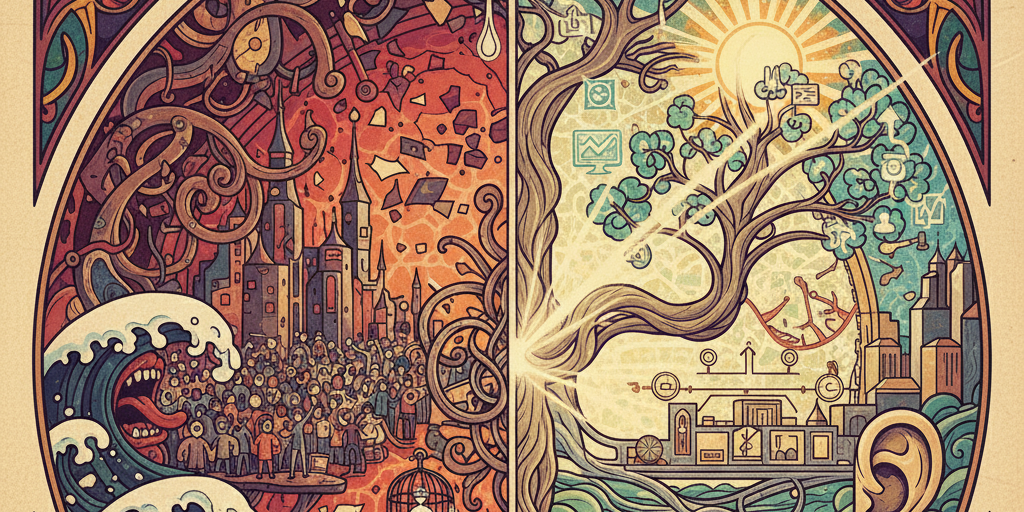
We get so distracted by the urgent "waves" crashing on the shore, the daily performance, the need to look in control, that we completely miss the inexorable "tide" building beneath the surface. This isn't strength; it’s a hollowed-out performance. And it's quietly breaking us.
Most organisations and people live by the crash of the latest headline: viral metrics, hot takes, quarterly theatrics. Those moments feel urgent and they seduce us into action. Meanwhile, the deeper directional forces that actually compound value, the slow-moving shifts in customer behaviour, process reliability, decision-quality, go unprotected.
Noise & Erosion: Volume, performative debates, and hidden rot
Compounding the problem, voices that shout loudest are not always the most reliable; we too often treat volume as evidence. Add to that the cultural norm of pretending nothing feels wrong, for example the “controlled” executive who never admits uncertainty, and you get systems that look polished on the surface but are brittle underneath. Debates turn performative; decisions become emotional reactions or popularity contests rather than reasoned choices.
We're all navigating a sea of constant noise: endless debates, viral opinions, and fleeting distractions that demand our attention. It's comfortable in a way, this surface-level frenzy: scrolling through heated arguments, nodding along to the loudest voices, and keeping our deeper emotions locked away to maintain that illusion of control.
But lurking beneath is a relentless undercurrent pulling us under, one where we blindly trust unproven ideas, let flawed logic derail real progress, and numb ourselves to avoid the raw ache of truly feeling. This isn't just inefficiency; it's a quiet erosion of our ability to connect, decide, and thrive, turning potential allies into adversaries and inner strength into brittle armour.
Costs & Consequences: Personal and organisational attrition
This fear of feeling turns your inner world into a minefield. You tiptoe through life, proud of your control, but slowly, undeniably, growing more disconnected. We aren’t just afraid of sadness or grief; we're terrified of being sad in front of someone who shrugs. We're not afraid of our anger; we're afraid of being judged for it. It's the abandonment we’re trying to avoid.
So we hide. We block intimacy, because true closeness only exists to the degree that we reveal our whole selves: flaws, fears, and all. The less you show, the more distant you become. The quality of the life you get will depend on the quality of your decisions, but how can you make great ones when you're running from the truth of your own experience?
The result is predictable: resources wasted on stunts that don’t scale, leaders burned out by constant reactivity, teams mistrustful because feedback was ignored or gaslit, and a long-term edge that quietly erodes.
Poorly weighted counsel (advice from those with no track record) steers strategy into dead ends. When people hide feelings behind polished composure, mistakes are not repaired; they calcify.
When arguments descend into cheap tactics, constructive discourse ends and noise multiplies. Each diverted hour, each compromised decision, makes recovery harder. This is not hypothetical harm; it is cumulative attrition or the slow theft of future optionality.
The toll mounts silently at first, then crashes hard: relationships fracture from unspoken resentments, opportunities slip away because we followed the hype instead of the steady pull, and that suppressed vulnerability festers into isolation or burnout.
Imagine the executive unraveling in private after another "unflappable" day, or the partner who dodges intimacy, labeling it "drama," only to wake up profoundly alone. Bad arguments go unchecked, breeding more division; unreliable opinions shape life-altering choices, compounding regrets.
Redefining courage & tactical habits: From performance to presence
The breakthrough comes when we redefine courage. Who is truly braver: the one who flees the second an emotion gets too close, or the one strong enough to carry the full weight of their experience? Resilience is not being impervious to pain; it’s feeling it deeply and acting anyway.
This requires a new, ruthless discernment. We must stop listening to the loudest, most "composed" voices and start assessing the "believability" of the people we let in. We have to ask: do they have a track record of authenticity, or just a track record of performance? It's time to triangulate with people who are more knowledgeable in the practice of being real, not just in the language of it.
This also means changing how we engage. When faced with the emotionally-driven "bad arguments" of those who aren't believable, those who meet your rapier thrust with a battle-axe, you must stop defending the distorted version of yourself they've created.
Reiterate your actual point. Define your truth. And if they prove unwilling to see you? Recognise that not all debates are rational. Sometimes the strongest, most resilient move is to walk away.
There is a disciplined alternative: favour the tide over the wave. Anchor decisions to long-term indicators, not temporary applause. When you seek counsel, weight it by demonstrated competence, candour, and triangulate intentionally with a small set of high-believability people, then test their views against evidence.
In conversation, refuse the escalation of bad-faith arguments: name the distortion, restate the actual position, invite a summary, or disengage if the exchange is purely performative. Finally, treat emotional openness not as a liability but as a tool: name what you feel, let it inform your perspective, then act on principles rather than avoidance. These are tactical habits: simple, repeatable, and compounding.
Yet here's the shift that cuts through: true power emerges when we discern the inexorable trends over the fleeting surges, weigh voices by their proven track records and candour, calmly expose distorted claims without escalating the chaos, and dare to voice our raw truths even when it stings.
It's not about armoured detachment but rebellious openness, feeling deeply yet acting wisely, triangulating with those who've earned believability, and redirecting debates by clarifying misfires rather than swinging wildly. This alchemy transforms avoidance into authentic resilience, turning emotional minefields into fertile ground for growth.
Vision & Practice: A steadier calendar and deeper bonds
Imagine a life based not on protection, but on presence. A future where you no longer just perform composure, but instead build real, deep-rooted resilience. This is a life where you finally work with the tide of your true self, not against the fleeting waves of suppression. It’s a reality where intimacy is finally possible, because you are brave enough to be fully seen, even when what's visible isn't tidy, filtered, or finished.
This isn't weakness; it's a rebellion. It's the ultimate strength. Stop celebrating the hustle of hiding. The real work is being honest, even when it’s scary. Who is one person you can show your real self to this week?
Imagine a calendar measured by durable progress, not trending moments: fewer frantic pivots, decisions that compound, teams that repair and learn fast because they tell the truth. You get better odds because you listen to people whose track record and honesty matter; you get more clarity because arguments are cleaned of rhetorical smokescreens; you get real resilience because feelings are acknowledged and channeled into disciplined action.
Envision a life where decisions flow from clear, unfiltered insight: deeper bonds forged through honest exposure, debates that build rather than break, and a steady momentum that outlasts the storms. You'll stand taller, not from hiding scars but from owning them, resilient enough to grieve openly without judgment, connect without barriers, and pursue goals with allies who speak truth.
Start today: name one suppressed feeling aloud to someone trustworthy, question a noisy opinion's source, and redirect a skewed argument with quiet clarity. Three immediate moves:
- Protect one long-term indicator (revenue per retained customer, process uptime, learning velocity) and refuse short-term tradeoffs that erode it.
- Create a tiny triangulation panel: three people whose work you can verify; weight their input more than the crowd.
- The next time a debate goes off the rails, label the bad argument, restate your steel-man, and if that fails, close the conversation. And when fear or doubt shows up, name it aloud and choose the next rational step anyway.
If you will trade spectacle for steadiness, you’ll stop mistaking noise for signal. Do that, and the future you’re building will arrive on purpose. One deliberate decision at a time.
The Essential Concepts
Performance vs. Durable Resilience
The essay diagnoses the operational cost of Emotional Suppression, which is the heavy praise for emotional detachment and restraint mistaken for maturity or resilience. This creates a system where:
- Surface Composure is Fragile: The appearance of "unflappable calm" is actually the most brittle thing about an individual or organisation, often masking burnout and disconnection.
- Waves vs. Tide: We get distracted by urgent, fleeting "waves" (viral metrics, hot takes, quarterly theatrics) and completely miss the inexorable "tide" (deeper directional forces like customer behavior, process reliability, and decision quality) that compounds long-term value.
- Volume vs. Evidence: We treat the volume of a voice or headline as evidence, allowing performative debates and emotional reactions to replace reasoned choices.
- Emotional Cost: Fear of being judged for emotions leads to suppression, which becomes cumulative attrition (the slow theft of future optionality) and prevents the intimacy necessary for making great decisions.
Redefining Courage and Strategic Habits
The turning point is redefining courage not as fleeing emotion, but as feeling pain deeply and acting anyway. This requires ruthless discernment and a set of tactical habits to recover optionality:
- Believability Framework: A new measure of counsel that assesses people based on their track record of authenticity and demonstrated competence, not just surface composure or volume.
- The Anti-Performance Posture: Trade spectacle for steadiness by anchoring decisions to long-term indicators rather than temporary applause or trending noise.
- Managing Bad Arguments: When faced with emotionally driven, distorted arguments (meeting a rapier thrust with a battle-axe), refuse escalation. Label the bad argument, reiterate your actual point, and disengage if the exchange is purely performative, recognising that not all debates are rational.
- Emotional Openness as a Tool: Treat emotional openness not as a liability but as a tool. Name the feeling, let it inform your perspective, and then act on principles rather than avoidance.
Tactical Moves for Durable Decision-Making
To trade spectacle for steadiness and build durable resilience, the article prescribes three immediate moves:
- Protect one long-term indicator (e.g., revenue per retained customer, process uptime, learning velocity) and refuse short-term tradeoffs that erode it.
- Create a tiny triangulation panel: identify three people whose work you can verify and weight their input more than the crowd.
- Manage Debate Escalation: The next time a debate goes off the rails, label the bad argument, restate your steel-man, and if that fails, close the conversation. Name fear or doubt aloud and choose the next rational step anyway.
I am a Knowledge Worker...
What does it mean for me?
You may be sacrificing your long-term influence for the short-term safety of Surface Composure, mistakenly equating Emotional Suppression with professional resilience.
This creates a brittle professional identity. Your biggest risk is focusing on urgent Waves—the daily noise and quarterly theatrics—while ignoring the Tide of your career's long-term value: decision quality, process reliability, and learning velocity.
This distraction, coupled with valuing Volume vs. Evidence in corporate counsel, leads to cumulative attrition (the slow theft of future optionality).
The breakthrough requires adopting the Anti-Performance Posture and embracing Emotional Openness as a Tool.
By practicing ruthless discernment and Managing Bad Arguments, you build durable decision-making and establish yourself as an anchor of genuine competence, not just performative calm.
How do I action this?
- Protect the Tide (Long-Term Indicator): Identify one long-term indicator critical to your role's success (e.g., process uptime, project learning velocity, revenue per retained customer). Refuse one short-term tradeoff (e.g., skipping a crucial quality check, ignoring a technical debt fix) that would temporarily boost a wave metric (e.g., a fast deadline) but erode your chosen indicator.
- Build a Triangulation Panel (Believability Framework): Create a tiny triangulation panel—a list of three people whose counsel you will weight most heavily because you can verify their track record and candour. Before your next high-stakes decision, intentionally solicit and prioritise the input from these three over the general, loud consensus.
- Manage Debate Escalation (Label the Bad Argument): The next time a team debate goes off the rails into emotional reactions or distortions, label the bad argument (e.g., "That sounds like a straw man of my position") and restating your actual point clearly. If the distortion continues, close the conversation by saying, "I'm happy to resume when we can focus on the evidence."
- Emotional Openness as a Tool (Name Fear, Choose Step): The next time you feel fear or doubt (e.g., before presenting a risky idea), name the feeling aloud to a trusted colleague or yourself (e.g., "I feel uncertain about the outcome"). Acknowledge the feeling, then choose the next rational step anyway, treating the emotion as information, not a barrier to action.
I am a Freelancer, Solopreneur, Entrepreneur, Independent Worker...
What does it mean for me?
As an independent professional, your Surface Composure is a massive liability. Your fear of being judged for uncertainty leads to Emotional Suppression, which erodes the trust essential for client relationships.
You risk mistaking the urgent Waves of trending noise and viral content for the Tide of your business's true value (like client retention or decision quality).
Chasing Volume vs. Evidence by listening to noisy gurus or trying to please everyone results in cumulative attrition—the slow theft of your future optionality.
The Turning Point demands you redefine courage, adopting the Anti-Performance Posture.
By utilising the Believability Framework for counsel and treating Emotional Openness as a Tool (e.g., with partners/clients), you trade spectacle for the steadiness necessary for business sustainability and growth.
How do I action this?
- Protect the Tide (Long-Term Indicator): Identify one long-term business indicator (e.g., revenue per retained customer, service delivery process reliability, marketing conversion rate). Refuse one short-term financial tradeoff (e.g., taking on a poor-fit client, cutting a quality step) that would temporarily boost a wave metric (e.g., monthly revenue) but erode your chosen indicator.
- Build a Triangulation Panel (Believability Framework): Establish a tiny triangulation panel of three high-believability individuals (e.g., a proven mentor, a candid client, a domain expert whose work you can verify). Weight their input on pricing or service decisions three times more heavily than general market noise or social media polls.
- Manage Debate Escalation (Label the Bad Argument): The next time a prospect or partner uses an emotionally-driven, distorted argument (a bad argument) to pressure you on price or scope, label the distortion (e.g., "That seems like an appeal to fear, not a rational concern") and reiterate your actual point (e.g., the value proposition). If the pressure continues, walk away to enforce the Anti-Performance Posture.
- Emotional Openness as a Tool (Name Doubt, Choose Step): The next time you face a major business decision that triggers doubt or fear (e.g., raising prices, pitching a new service), name the suppressed feeling (e.g., "I feel fear of rejection") to a trusted partner. Let it inform your perspective, then choose the next rational step anyway, modeling durable decision-making over emotional avoidance.