The Architecture of Doubt: Reclaiming Human Discernment in the Age of Probabilistic Machines.
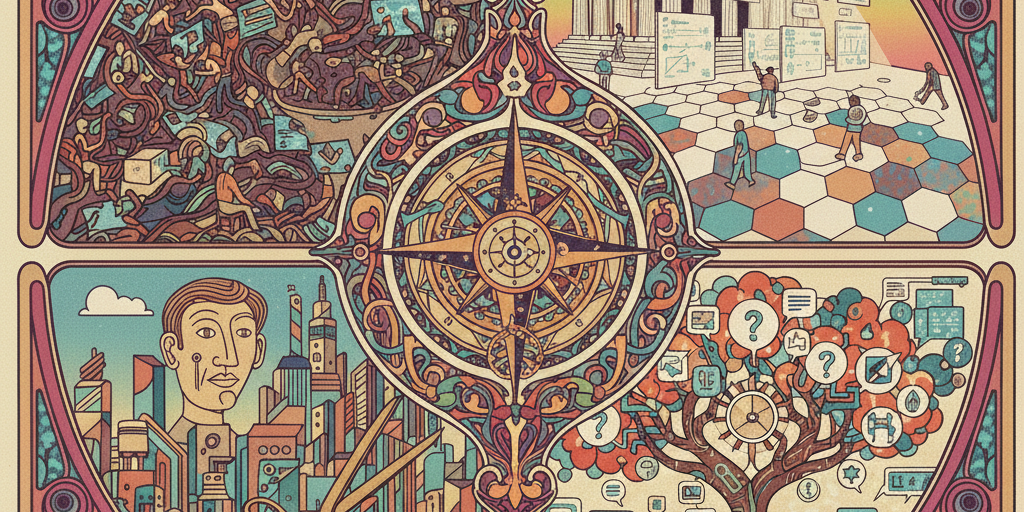
Large language models offer an intoxicating escape from the crushing demand for perfection.
But outsourcing our resilience comes at a cost we can no longer afford to pay. We are turning to algorithms to cure our exhaustion, trading critical judgment for millisecond answers. Here is why intentional underperformance is the key to surviving the AI era.
Are you entirely certain that if the sirens started blaring right now, you’d possess the quiet, unshakeable courage to navigate the chaos or have you just been playing the lead role in a very comfortable cage?
What if the most dangerous thing you trust every day isn’t a person, a system, or even your own instincts, it’s the tool that never tells you it’s wrong?
What if the very tools you trust to amplify your brilliance are silently eroding the judgment that makes them useful?
The Exhaustion Trap & The AI Escape
A quiet exhaustion runs through modern work. We have bought into the idea that every trivial facet of our jobs requires flawless execution, and the resulting paralysis has left us desperate for a shortcut. We’ve started acting like the tools we build, careening forward without a moment of reflection just to keep pace.
Desperate to alleviate the pressure of constant perfection, we turn to large language models. They offer an intoxicating comfort: answers in milliseconds, with no guessing or hesitation. But we have begun to mistake the massive database at our fingertips for our own intelligence, blurring the line between the ability to generate an answer and the capacity to actually comprehend it.
The Illusion of Certainty
The danger is that the tool succeeds convincingly, inventing realities we never thought to question. Because a model acts without doubt, we project human intent onto it. We forget that it isn't choosing between truth and a hallucination; it is simply executing a probabilistic math equation where every output is a calculated guess. Yet, because we are so exhausted by the demand to be right all the time, we gladly accept its mathematical guesses as certainty. We forget that judgment (taking responsibility for the actual impact of a decision) cannot be automated.
We treat this perfectionism as a personal failing, ignoring that in low-trust cultures, it functions as a survival mechanism. It acts as a heavy shield that keeps us safe from criticism but ultimately prevents us from doing the work that actually matters. Burnout spikes, and our momentum dies. Because we refuse to slow down, we treat every daily challenge as an urgent fire, burning through mental bandwidth making the same agonising decisions over and over. When real consequence arrives, we realise we’ve outsourced our resilience. We are left flawlessly executing yesterday's playbook, fundamentally unprepared for the systemic shifts rewriting tomorrow.
Every time we outsource judgment, we erode our capacity to make it. When we accept an AI's first output without scrutiny, we atrophy our curiosity, forgetting that the true purpose of an answer is to arm us with the context needed to ask a much harder question. As reliance deepens, our strategic decisions become vulnerable to subtle distortions. The productivity boosts promised by AI quickly become a liability that drains credibility.
The Strategy of Intentional Underperformance
To achieve greatness, you must consciously decide what you are going to be bad at. Intentional underperformance in trivial areas isn't a failure; it’s the vital trade-off that frees up your bandwidth to be world-class where it counts.
Reclaiming Human Governance
The way forward isn’t a naive rejection of the tool, but a calculated strategy: containing it where it poses a risk, and fiercely reclaiming the human responsibility it tries to automate away. The best operators don’t avoid uncertainty. They navigate it not by discarding data, but by using it to calibrate the core principles they rely on when the numbers inevitably run out. Instead of treating every AI output as magic, treat it as raw material. Identify the underlying criteria that make a result trustworthy, build a rigorous set of principles around those criteria, and continuously audit those rules as the terrain changes.
The world will continue to demand more. It is time to stop confusing the flawless perfection required to code a machine with the messy, resilient reality required to lead a team. By building systems that leverage the machine's ability to sort probabilities while reserving high-stakes discernment for human judgment, we establish a reliable system of governance.
The tool will keep answering. The difference is we will retain the capacity to know which questions to ask next.
The Essential Concepts
The AI Escape: Mistaking Math for Meaning
A quiet exhaustion drives the modern professional to treat LLMs as a "Cognitive Firebolt"—a shortcut to bypass the agony of decision-making. However, this escape creates a fundamental category error.
- The Comprehension Gap: We confuse the ability to generate an answer with the capacity to comprehend it. An LLM doesn't choose between truth and a hallucination; it simply predicts the next most likely token in a probabilistic sequence.
- The Illusion of Intent: Because models act without doubt, we project human intent onto them. We forget that the machine is executing a math equation while leadership requires taking responsibility for the impact of the result.
- The Shield of Perfectionism: In low-trust cultures, we use AI-generated "perfection" as a survival mechanism—a shield to avoid criticism. But this shield eventually becomes a cage, trapping us in yesterday's playbook.
The Atrophy of Discernment: The High Cost of Speed
The productivity gains promised by AI come with a hidden "Discernment Tax." Every time you outsource a high-stakes judgment, you erode the very resilience required to navigate systemic shifts.
- Curiosity Decay: When we accept the first output without scrutiny, we atrophy our curiosity. We forget that the true purpose of an AI-generated answer is to provide the context needed to ask a harder question.
- Strategic Distortions: Reliance on "millisecond answers" creates subtle distortions in strategic decisions. If you feed the machine your hesitation, it amplifies your bias, turning a productivity tool into a liability that drains your personal credibility.
- Resilience Outsourcing: By refusing to slow down, we treat every daily challenge as an urgent fire. When a real crisis arrives, we realize we possess the "comfortable cage" of the machine's answers, but none of the unshakeable courage required to lead through chaos.
The Strategy of Intentional Underperformance
To be world-class where it counts, you must consciously decide where you will be mediocre. This is not a failure; it is Strategic Resource Allocation.
- The Trivial Trade-off: Identify areas where "good enough" is truly enough. Automate these trivialities ruthlessly to reclaim the mental bandwidth required for high-stakes discernment.
- Fierce Human Governance: The best operators treat AI output as "raw material" rather than a finished product. They use the machine's ability to sort probabilities, but they reserve the right to override the math with First Principles.
- Governance Systems: Build a rigorous set of principles around the criteria that make a result trustworthy. Continuously audit these rules as the technical terrain shifts.
The "Human Governance" Protocol
To reclaim your agency and arm yourself with the context needed to ask the right questions, execute these three surgical shifts this week:
- The Underperformance Audit: List three recurring tasks that demand your "perfection" but yield low strategic value. Intentionally lower your standards for these tasks to free up 20% of your mental bandwidth.
- The Prompt-to-Probe Shift: For your next AI interaction, do not ask for a final answer. Instead, ask the model to: "Identify three non-obvious flaws in my current approach and suggest two harder questions I should be asking."
- The Responsibly Rule: For any high-stakes decision involving AI, document the "Human Override." State clearly: "The machine suggests X, but based on the principle of Y, I am choosing Z."
"The tool will keep answering. The difference is we will retain the capacity to know which questions to ask next."
I am a Knowledge Worker...
What does it mean for me?
In a corporate environment, the pressure to maintain a Shield of Perfectionism is often a survival mechanism used to avoid criticism in low-trust cultures.
You are likely using the AI Escape to bypass the agony of decision-making, but this creates a dangerous Comprehension Gap.
While the machine executes a math equation, you may be projecting an Illusion of Intent onto its output, mistaking a "likely token sequence" for leadership.
If you continue to outsource high-stakes judgment, you pay a compounding Discernment Tax that atrophies your curiosity and leaves you flawlessly executing yesterday’s playbook while the market’s terrain shifts.
The risk is becoming a "human firewall" for mediocre AI drafts, losing the very credibility that defines your value for promotion.
By refusing to slow down, you treat every minor notification as an urgent fire, leading to Resilience Outsourcing.
When a true crisis arrives, you may find yourself trapped in a "comfortable cage" of automated answers but devoid of the Fierce Human Governance required to lead through organizational chaos.
You must adopt a Strategy of Intentional Underperformance, consciously deciding where to be mediocre so you can reclaim the mental bandwidth required to be world-class where the stakes are high.
How do I action this?
- Execute the Underperformance Audit: List three recurring, low-stakes tasks (e.g., internal status updates, routine meeting recaps, or basic deck formatting) where you currently strive for "flawless execution." Intentionally lower your standards for these Trivial Trade-offs to free up 20% of your mental bandwidth for high-leverage strategic thinking.
- Implement the Prompt-to-Probe Shift: The next time you use an LLM for a complex project, do not ask for a solution. Instead, prompt the model to: "Identify three non-obvious flaws in my current approach and suggest two harder questions I should be asking." This combats Curiosity Decay and ensures the tool provides context rather than a shortcut.
- Apply the Responsibility Rule: For any high-stakes decision involving AI, document your Human Override. State clearly: "The machine suggests Option A based on probabilistic trends, but based on our First Principle of [Company Goal], I am choosing Option B." This enforces Fierce Human Governance and protects your personal credibility.
- Establish a Governance Audit Ritual: Spend 30 minutes every Friday afternoon auditing the "rules" you use to trust AI-generated data. Ask: "Has the project terrain shifted? Are the principles I used to validate this output still true?" Continuously refining these Governance Systems prevents your strategic decisions from suffering from subtle Strategic Distortions.
I am a Freelancer, Solopreneur, Entrepreneur, Independent Worker...
What does it mean for me?
As an independent, your Pricing Power is tethered directly to your judgment. If you use AI as a total AI Escape, you are essentially outsourcing your unique value proposition.
You may be falling into the Illusion of Intent, assuming the AI's first output is "good enough" for a client, but this creates Strategic Distortions that drain your brand's authority.
Every time you accept the first answer, you suffer from Curiosity Decay, forgetting that the purpose of the tool is to provide the context needed to ask the "harder question" that justifies your premium fees.
The real danger for the solopreneur is Resilience Outsourcing. By moving at "millisecond speed," you are building a business that is a "comfortable cage" of high-speed but shallow output.
When a systemic shift occurs—like a change in market demand or technology—you’ll realize you’ve atrophied the very resilience required to pivot.
To scale sustainably, you must use Strategic Resource Allocation: ruthlessly automating the trivial while reserving Fierce Human Governance for the high-stakes discernment that no algorithm can replicate.
How do I action this?
- Automate the Trivial Ruthlessly: Identify areas like basic invoicing, scheduling, or social media drafting where "good enough" is truly enough. Use Intentional Underperformance here—accepting the AI's 80% solution—to reclaim the energy required for the deep, high-value work that clients actually pay for.
- Use the Machine as "Raw Material": Never treat a client-facing AI output as a finished product. Apply the Human Governance Protocol by taking the machine's "probabilistic sort" and manually rewriting the final 20% based on your specific First Principles and market experience.
- Audit Your Strategic Moat: Every 30 days, run a Governance System check. Ask: "Where has my reliance on AI created a blind spot in my strategy? What is the one thing I've stopped questioning because the machine makes it look easy?" This prevents Strategic Distortions from eroding your competitive advantage.
- Practice Reflective Deceleration: When an AI gives you a millisecond answer to a high-stakes problem (e.g., your business model or a major contract), force a 24-hour waiting period. Use this time to calibrate the "math" of the model against the "messy reality" of your long-term 20-Year Thesis.