Pocket Portal: How Continuous Micro-Distractions Reprogram Decision-Making and Shift Organisational Margins.
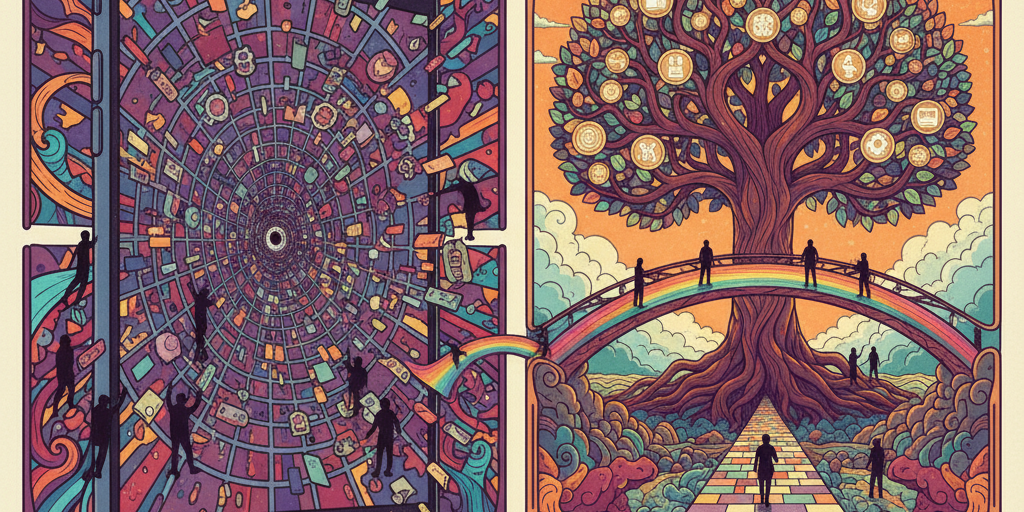
When the device that promises connection becomes your dominant decision tax. Four design moves to measure attention, surface disagreement, and compound durable advantage.
Why does it feel like you’re running faster than ever just to stand still?
What if the thing you rely on to keep you informed is quietly stealing your ability to decide well?
What if the device in your pocket, the one you can't put down, is quietly stealing your future, one notification at a time?
The Portal: Social and Organisational Misalignment
That device in your pocket, the most expensive and most used thing you own, is a masterpiece of modern connection. It’s a portal. But it's a portal that relentlessly shows you everything you can’t have, can’t afford, and won’t get. Every argument you want to have is one click away. Every piece of bad news, real or imagined, is served up on an endless scroll.
This connection, which feels so powerful and magical, is also deeply enervating. It’s a carefully engineered system of manipulation and addiction, designed to keep you consuming, reacting, and ultimately, standing in place. The unacknowledged flaw in this constant stream is that it thrives on creating a deep sense of "out-of-syncness", not just with the world, but with yourself.
Most of us live with a single screen that promises connection and knowledge but delivers curated irritation, imagined catastrophes and endless friction. That device, our portal to everyone and everything, turns curiosity into consumption and conversation into argument-ready fragments.
Teams pretend alignment while leaving the real disagreements unspoken; leaders chalk up missed signals to “bad luck” instead of structural misalignment. Comfort looks like responsiveness; the cost looks like eroded clarity.
Personal Entrapment and Unspoken Rifts
You're glued to this sleek gadget, checking it obsessively throughout the day. It dangles endless temptations: stuff you'll never afford, fights waiting to erupt with strangers, a flood of grim headlines, half of them invented for clicks. Sure, it connects you in ways that feel electric, almost enchanting, but that pull drains you, twists your focus, and hooks you deeper than you admit.
Meanwhile, clashes with others simmer unspoken; you spot misalignments in views or values, yet they go unaddressed, festering like hidden cracks in a foundation. And those quiet instincts are dismissed as overreactions, leaving you stuck in routines that erode your edge without you noticing.
The Slow Corrosion (Long-term Cost)
This isn't just about wasted time. The real cost is a slow, invisible corrosion. The weak position you may find yourself in today isn’t bad luck; it’s the quiet accumulation of a thousand tiny choices made while distracted.
Choosing the scroll over the page, the argument over the reflection, the fleeting distraction over the deep work. None of these hurts you in the moment. There's no immediate slap on the wrist. But time amplifies what you feed it. Day by day, these ordinary choices ensure time is working against you.
The internal disagreements between who you want to be and what you actually do fester and cause rot. You become your own Sisyphus, rolling a boulder halfway up the hill with a burst of intensity, only to let it slide back to the bottom when the immediate reward doesn't appear. Progress is undermined, and starting over gets harder every single time.
Attention creaks under the weight of notification economies; decisions get deferred until they are emergencies. Small misalignments (unvoiced disagreements about priorities, values, or risks) compound into systemic failures.
People who see the coming breakages are labeled alarmists and sidelined, so the warnings never change behaviour. Individually, the slow leak is fatigue, stalled progress and the peculiar pain of being right too early.
Organisationally, it’s wasted capital, missed markets and reputational collapse. The longer you tolerate this, the less margin you have to act.
Escalation: Tug-of-war, Backlash, and the Punishment of the Clear-eyed
This constant tug-of-war intensifies everything. That addictive scroll saps your energy, turning potential breakthroughs into forgotten tabs, while unresolved rifts widen into chasms bruising trust, wasting time, and blocking real progress.
Years slipping by in half-hearted efforts, where skipping that one smart habit today feels harmless, but stacks up to a life of regrets, amplified by time's relentless math. Worse, when you sense a crisis brewing (a toxic dynamic at work, a misguided path in love, or a broader shift ignored) you voice it and get labeled alarmist or out of touch.
The backlash stings, silencing you just as the fallout hits, proving you right at the cost of your sanity and opportunities lost. It's a vicious cycle that doesn't just hold you back; it punishes the clear-eyed, letting rot spread until everything crumbles.
Reframing Breakthroughs & the Cassandra Role
Giant leaps aren’t real. Not in the way we think. The breakthrough isn't a single, heroic moment of change. It is the quiet, unemotional decision to bring the single most important disagreement to the surface: the one between your present actions and your desired future.
It's about accepting that you must become your own Cassandra. You have to be the one who sees the coming catastrophe, the slow implosion of your own potential, and act on it, even when no one believes you.
Even when the world, and your own habits, call you foolish or extreme for making a different choice. History doesn't reward the first person to see the truth; it often punishes them. Being right for your future often feels like being wrong right now. The weapon isn't intensity; it's a cold, calculated consistency.
Designing Attention and Disagreement
Change begins by treating attention and disagreement as design problems.
First, measure what fragments you: a short audit of where your attention goes will reveal how noise masquerades as work. Second, make disagreement visible: write the list, rank the knottiest issues, and direct them to the person who can actually decide. Third, choose one micro-habit and compound it: twenty minutes of focused work, one daily read, one recurring savings transfer, small consistent moves build positional strength. Finally, create a low-cost ritual for early warnings: document the evidence, publish it internally, and force a short unemotional review.
These four deliberate acts, attention audit, prioritised disagreement inventory, habit compounding, and a safe Cassandra channel will turn diffuse risk into manageable decisions.
Tactical Implementation: Surfacing and Habit Compounding
Start by surfacing those buried tensions head-on, listing them out, prioritising the thorniest ones. The clashes over core beliefs or big calls. Then, dissect them calmly, without heat. Pair that with relentless tiny shifts: ditching the mindless swipe for a deliberate read, stashing savings instead of impulse buys, choosing dialogue over dismissal.
These aren't flashy; they're the unglamorous processes that builds unshakeable ground. And when those early warnings arise? Embrace them, even if it means standing alone at first, knowing history bends toward the persistent truth-tellers who weather the scorn.
Vision and Payoff
Imagine a future where you are perpetually in a favourable circumstance. A future where, no matter what happens in the world, you are never forced into a bad decision because your foundation is solid.
This isn't an accident. It's the inevitable result of making time your ally. When others finally notice your "giant leap," you will know it wasn't a leap at all, but a long series of ordinary, private choices that suddenly became visible. You stopped looking for the magic moment and understood how the ordinary becomes extraordinary.
If you want these results, you must be willing to pay the price. The price is both easier than you imagine and harder than you think. It is the discipline of consistently making the small choices that put you on the path to success, for years, even when the results don’t show it… yet.
Imagine a calendar that protects your ability to think, teams that pull misalignments into the open before they rot, and a steady accumulation of small choices that make you resilient to shocks. You regain time, reduce costly surprises, and make room for ideas that were previously dismissed as “too early.”
Envision a life reclaimed: energy surging from true bonds, not digital highs; disputes morphing into sharper insights that propel you forward; a foundation so solid that crises become chances, time your ally in crafting extraordinary outcomes from ordinary discipline. No more bleeding for ignored foresight, you thrive in clarity, sidestepping traps others fall into, free to chase what matters.
Pocket that phone for an hour today, jot down one unspoken disagreement and tackle it openly, commit to a single small habit that stacks in your favour. Your future self is waiting. Don't let another day feed the void.
Then, identify the one, single choice you know you should be making. The one that, if done daily, would put time back on your side. Don’t announce it. Don’t plan a revolution. Just do it today. And then do it again tomorrow. That is how you begin.
In parallel, run a 72-hour attention log, create a ranked disagreements doc and publish one evidence-backed warning this week. Do those four things and you redraw the line between being overwhelmed and being ready.
The Essential Concepts
The Device as a Decision Tax: The article describes the device in your pocket as a "portal" that is a "masterpiece of modern connection" but also a "carefully engineered system of manipulation and addiction." This constant stream of curated irritation and argument-ready fragments becomes a dominant decision tax, quietly stealing your ability to decide well. It thrives on creating a deep sense of "out-of-syncness" with both the world and yourself.
The Slow Corrosion: The real cost of continuous micro-distraction is a slow, invisible corrosion. It’s the quiet accumulation of a thousand tiny, distracted choices that ensure time is working against you. The internal disagreements between who you want to be and what you actually do fester and cause rot, leading to a Sisyphus-like existence where progress is constantly undermined. Organisations suffer from fragmented attention, deferred decisions, and a lack of margin to act, while individuals who see the coming breakages are punished for being "Cassandras."
Designing Attention and Disagreement: The breakthrough is realising that "giant leaps aren't real" and that you must become your own Cassandra, acting on your instincts even when no one believes you. The weapon isn't intensity; it's cold, calculated consistency. The solution is to treat attention and disagreement as design problems:
- Measure Attention: Conduct a short audit to reveal how noise masquerades as work.
- Surface Disagreement: Write a list of the knottiest issues and direct them to the person who can actually decide, ensuring a safe channel for early warnings.
- Compound Habit: Choose one micro-habit (e.g., twenty minutes of focused work, one daily read) and consistently repeat it to build positional strength.
Actionable Steps - Redrawing the Line: The article provides a four-part tactical implementation protocol to shift your organisational margins and personal discipline:
- Run a 72-hour attention log.
- Create a ranked disagreements doc and tackle one openly.
- Publish one evidence-backed warning this week (a low-cost ritual for early warnings).
- Identify the one, single choice you know you should be making, and do it today, and then again tomorrow (habit compounding).
I am a Knowledge Worker...
What does it mean for me?
The constant digital distraction from your "pocket portal" is more than a time-sink; it acts as a dominant decision tax, quietly stealing your ability to make clear, strategic choices.
This is creating a slow corrosion where unvoiced disagreements (structural misalignment) at work, and your own internal conflicts between intention and action, stack up into systemic problems.
You feel like Sisyphus, running hard but getting nowhere.
The essay's breakthrough is realising that giant leaps aren't real; true advantage comes from designing attention and disagreement by becoming your own Cassandra—someone who acts on their clear-eyed warnings, even if the surrounding culture initially punishes you for it.
The only way to win is through cold, calculated consistency.
How do I action this?
- Run a 72-Hour Attention Log: For the next three days, keep a simple log (or use a screen-time app) that specifically measures not total phone use, but the number of times you check your phone or a specific distracting app. This measures attention and reveals how noise masquerades as work.
- Create a Ranked Disagreements Doc: Write a document listing the top three knotiested issues or unspoken rifts in your project or team—the disagreements about priority, risk, or value that everyone is avoiding. Surface the Disagreement by sending this doc to the one person who has the authority to actually decide on the issue.
- Compound One Micro-Habit: Identify the one single choice that would put time on your side (e.g., 20 minutes of focused work on your primary project before checking email, or a 10-minute daily review of your top goals). Commit to doing this micro-habit today, and then again tomorrow.
- Publish One Evidence-Backed Warning (The Cassandra Channel): Identify a risk or impending problem in your organisation that others are ignoring (an early signal). Document the evidence (not the emotion) and publish it internally, forcing a short, unemotional review. This acts as a low-cost ritual for early warnings.
I am a Freelancer, Solopreneur, Entrepreneur, Independent Worker...
What does it mean for me?
The constant digital distraction from your "pocket portal" is more than a time-sink; it acts as a dominant decision tax, quietly stealing your ability to make clear, strategic choices.
This is creating a slow corrosion where unvoiced disagreements (structural misalignment) with clients or co-founders, and your own internal conflicts between intention and action, stack up into business-stalling problems.
You feel like Sisyphus, running hard but getting nowhere.
The essay's breakthrough is realising that giant leaps aren't real; true advantage comes from designing attention and disagreement by becoming your own Cassandra—someone who acts on their clear-eyed warnings, even if the surrounding market initially calls you foolish for making a different choice.
The only way to win is through cold, calculated consistency.
How do I action this?
- Run a 72-Hour Attention Log: For the next three days, keep a simple log (or use a screen-time app) that specifically measures not total phone use, but the number of times you check your phone or a specific distracting app. This measures attention and reveals how noise masquerades as work.
- Create a Ranked Disagreements Doc: Write a document listing the top three knotiested issues or unspoken rifts in your business—the disagreements about priority, risk, or value (e.g., pricing, target customer, or product features). Surface the Disagreement by sending this doc to the relevant client, co-founder, or key advisor to force a decision.
- Compound One Micro-Habit: Identify the one single choice that would put time on your side (e.g., 20 minutes of deep work on a new asset before checking email, or a 10-minute daily review of your financial targets). Commit to doing this micro-habit today, and then again tomorrow.
- Publish One Evidence-Backed Warning (The Cassandra Channel): Identify a risk or impending problem in your business that you've been ignoring (e.g., a trend among your clients, a flaw in a key process). Document the evidence (not the emotion) and share it with your audience or a key client/peer. This acts as a low-cost ritual for early warnings.