From Thread to Cable: How Repeated Tiny Hesitations Lock Teams into Mediocrity.
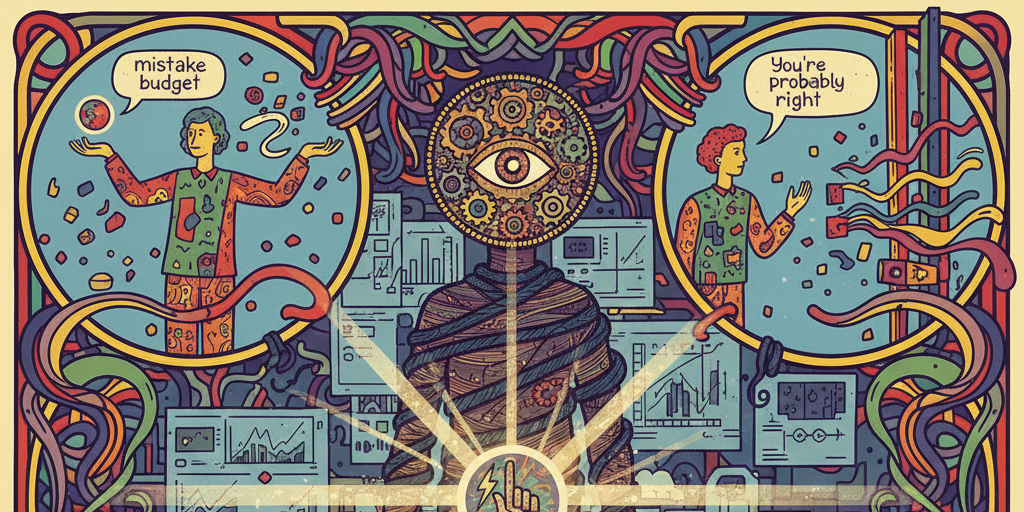
Stop treating being wrong like a career risk. Reprice mistakes, set a mistake budget, and get the speed that outcompetes certainty. A short guide to redesigning decision architecture so errors are experiments, not verdicts. Practical moves you can apply this week.
Are you trying to be brilliant, or are you just terrified of looking stupid?
What would you attempt today if being wrong stopped feeling like a verdict?
What if the very “smart” choices you’re making are silently steering you toward mediocrity?
Rules, Rituals, and Performance Theater
Most of us are trapped in a game we can’t win because we are playing by the wrong rules. We obsess over making the "perfect" move. We treat every disagreement like a gladiator match, wasting hours in arguments that are really just ego competitions disguised as a search for truth. We tell ourselves we are being careful, but we are actually being calcified.
The real threat isn't a lack of talent; it's the crushing weight of expensive mistakes. We agonise over decisions not because we lack judgment, but because we have structured our lives so that being wrong is catastrophic.
When the cost of failure is too high, you overthink everything and usually still choose wrong. This is the silent killer of potential: the belief that you must be a genius to take a step.
We are stuck in routines that promise safety but quietly suffocate possibility. Decisions become spectacles of correctness, a public display of ego masquerading as truth-seeking, where saying “I might be wrong” is treated like surrender.
That posture turns thinking into theater and thinking time into delay. We over-analyse because a single mistake feels catastrophic; we mistake cautiousness for wisdom. Habits accumulate in silence: the first tiny choice is an almost invisible thread that, repeated, becomes a cable locking us into how we act and what we believe.
Meanwhile, the people who actually move things forward don’t waste themselves on perfection. They design lives where errors are small, reversible, and cheap; they iterate. That structural difference, not brilliance, but the cost of being wrong, explains why nimble teams outrun larger ones.
We live in a world that rewards endless analysis, polished arguments, and the illusion of certainty. Comfort comes wrapped in data sheets, meeting decks, and the endless pursuit of the next brilliant idea.
Yet beneath that veneer lies a quiet flaw: we spend more time proving ourselves right than actually moving forward. Every debate becomes an ego duel masquerading as truth‑seeking, and the habit of insisting we’re the smartest in the room drains our energy and stalls progress.
Hesitation, Habit, and the Cost of Being Right
This hesitation is not a pause; it is a prison. Every time you delay action to protect your ego or avoid a misstep, you are weaving a trap. As Dr. Orison Swett Marden described, the beginning of a habit is like an invisible thread, but with every repetition, and every moment of hesitation, we strengthen the strand.
Eventually, it becomes a steel cable that binds us irrevocably to inaction. Consider the pain you feel when you are stuck. We usually try to numb this sensation, but that avoidance stunts us. By fleeing discomfort, we reject growth.
The cost isn't just lost time; it's the atrophy of your spirit. While you stall, waiting for the "perfect" moment, the startups and the scrappy upstarts are running circles around you. They aren't smarter than you. They just realised that if you make mistakes cheap, you can move fast enough to fix them.
This problem compounds. Indecision eats time, ambivalence kills momentum, and the constant posture of defending ideas drains trust and joy. You pay in stalled projects, wasted talent, and the slow attrition of courage.
Emotional energy becomes tax: second-guessing, shame, and the quiet, corrosive fear of pain. Yet pain is not only punishment, as Phil Stutz and Barry Michels put it: “Pain is the universe’s way of demanding that you continue to learn. The more pain you can tolerate, the more you can learn.”
Avoiding discomfort preserves comfort for a season and poverty of growth for a lifetime. Ironically, avoiding big mistakes by freezing up guarantees you’ll never make the kinds of small errors that teach anything meaningful.
When each decision feels like a high‑stakes gamble, the price of a misstep skyrockets. Mistakes become catastrophes, prompting paralysis, endless revisions, and a perpetual sense of “what‑if.”
The hidden toll isn’t just lost hours. It’s the erosion of confidence, the creeping dread that every choice could be the one that derails everything. Over time, the cumulative stress gnaws at creativity, turning ambition into a cautious whisper.
Reprice Mistakes and Rewire Practice
Avoiding stupidity is easier than seeking brilliance. Stop trying to win every point. Learn to look at a heated debate, say "you're probably right," and walk away with your energy intact.
Realise that pain is not a signal to stop. As authors Phil Stutz and Barry Michels argue, pain is simply the universe demanding that you continue to learn. The more of it you can tolerate, the faster you evolve.
The strategy is simple but radical: Structure your life so being wrong isn't expensive. When the cost of error is low, you don't need perfect prescience. You just need the courage to act. You stop agonising and start iterating. You trade the paralysing pressure of "getting it right" for the dynamic freedom of "making it work."
Change starts when you reprice mistakes. Make being wrong cheap. Engineer experiments where failure is a lesson, not a headline. Replace debate-as-battle with curiosity and practice the small habit of conceding when evidence points elsewhere. Say, “you’re probably right” more often and watch friction fall away.
Treat the painful moments as curriculum: tolerate the sting long enough to extract the lesson. Build habits deliberately; remember Dr. Orison Swett Marden’s image: the beginning of a habit is an invisible thread, and every repetition strengthens that strand until it becomes a great cable that binds us. Use that cable to bind productive practice, not hesitation.
Pour your effort into work the way Christopher Nolan describes: believe in the possibility of making your best work, commit fully, and accept that the immersion will demand everything of you. When effort is absolute and mistakes are cheap, learning accelerates.
Imagine treating error like a low‑cost experiment instead of a career‑ending disaster. By deliberately lowering the stakes of being wrong you free yourself to iterate rapidly, just as scrappy startups outpace massive corporations.
Pair this with a simple mental shift: replace the need to win every argument with the humility to say, “You’re probably right.” That tiny concession cuts through ego, accelerates learning, and makes the pain of failure a catalyst rather than a punishment. Again, pain is the universe’s demand for growth; the more we can endure, the richer our lessons become.
Vision & A Low-Cost Experiment Life
Picture a life where decisions flow with confidence, not fear; where each misstep is a stepping stone, not a roadblock. Habits, once fragile threads, have woven themselves into sturdy cables that propel you forward, thanks to consistent, low‑risk experimentation. Your work becomes a canvas you pour yourself into, believing it could be the best you’ve ever created, just as Christopher Nolan does with his films.
Imagine a life where speed beats smugness, where you choose bold experiments over polished indecision. You move, fail fast, extract the lesson, and rebuild. Pain becomes pedagogy, and habits become the scaffolding of your competence. You finish projects because you stopped treating being wrong like a catastrophe. If you want that change, start now: pick one decision today that you will treat as an experiment (small stakes, measurable outcome).
Once you lower the stakes, you unlock a new level of intensity. You can finally pour yourself into your craft without the paralysing fear of judgment.
You adopt the mindset of Christopher Nolan: You approach every project believing it could be the best thing ever made. Even if it falls short, that belief is the fuel. You pour yourself into it until you are all-consuming. Why would you do it otherwise?
The new reality is not one without failure; it is one where failure no longer defines you. It is a place where you wrap yourself up in the work, seeking the thrill of creation rather than the safety of silence. Stop agonising. Make your mistakes cheap. Move fast.
Intentionally lower the cost of being wrong, repeat the act until it becomes a reinforced strand, and when the inevitable pain arrives, read it as instruction. Say “you’re probably right” when it diffuses ego, then pour yourself into the next attempt as if it could be the best thing you’ve ever done. Do this repeatedly; the fear that keeps you safe now will be the same fear that keeps you small. Reprice it, and you re-open your life.
Take the first step today: Choose one small project, set a “mistake budget,” and commit to treating every error as a free iteration. Speak “you’re probably right” at least once in your next discussion. Watch how quickly the weight lifts, how swiftly momentum builds, and how the horizon of possibility expands beyond the confines of cautious perfection.
The Essential Concepts
The Cost of Perfectionism
The core problem is not a lack of talent, but a structural flaw where fear of looking stupid causes agonizing delay and calcified action.
- The Silent Killer: When the cost of failure is too high, you overthink everything and usually choose wrong anyway. This fosters the belief that you must be a genius to take a step, leading to paralysis and a choice of cautiousness over wisdom.
- Thread to Cable (Habit): The beginning of a habit (hesitation, over-analysis) is an invisible thread, but every repetition strengthens the strand until it becomes a steel cable that binds us irrevocably to inaction and mistaking cautiousness for wisdom (Dr. Orison Swett Marden's insight).
- Pain as Pedagogy: The impulse to flee discomfort stuns growth. In reality, pain is the universe’s way of demanding you continue to learn (Stutz and Michels). Avoiding pain guarantees you'll never make the small errors that teach anything meaningful.
- The Structural Advantage: Nimble teams outrun larger ones not due to brilliance, but because they design lives where errors are small, reversible, and cheap; they iterate while others stall.
Repricing Mistakes and Rewiring Practice
The strategy is simple but radical: lower the stakes of being wrong to trade the paralysing pressure of "getting it right" for the dynamic freedom of "making it work."
- Reprice Mistakes (Structural Shift): Engineer experiments where failure is a lesson, not a headline. This involves setting a "mistake budget" for projects so that errors are free iterations.
- Diffuse Ego (Inner Game): Stop trying to win every point or defend your ego. Practice the small habit of conceding when evidence points elsewhere by saying, “you’re probably right” more often. This diffuses friction and accelerates learning.
- Embrace Pain as Curriculum: Tolerate the sting of pain long enough to extract the lesson. Pain demands that you learn; the more you can tolerate, the faster you evolve. Use the Marden principle to deliberately bind productive practice (like iteration) into a strong cable, instead of hesitation.
- Commit to the Craft: Approach work with the mindset of Christopher Nolan: commit fully to the possibility of making your best work and accept that the immersion will demand everything of you. When effort is absolute and mistakes are cheap, learning accelerates.
A Low-Cost Experiment Life
To design your decision architecture so errors are experiments, not verdicts, apply these three moves this week:
- Name the Error & Extract Data: The next time you fail, say (quietly or aloud) “I made a mistake,” and write one actionable data point you learned (treating the error as data, not indictment).
- Set a Mistake Budget: Choose one small project, set a “mistake budget,” and commit to treating every error as a free iteration within that budget.
- Practice Diffusing Ego: Speak “you’re probably right” at least once in your next discussion or heated debate to watch how quickly friction falls away and mental energy is conserved.
I am a Knowledge Worker...
What does it mean for me?
You may be battling The Silent Killer: a structural flaw in your professional environment where the perceived cost of failure is too high, leading to agonizing delay and mistaking cautiousness for wisdom.
This fear of looking stupid turns thinking into Performance Theater and decisions into spectacles of correctness, while the Thread to Cable mechanism binds you to inaction, preventing growth.
The only way to outcompete certainty is through the Structural Advantage of low-cost iteration, which nimble teams already use.
Your breakthrough requires you to Reprice Mistakes by embracing Pain as Pedagogy—seeing every mistake as a data point that demands you continue to learn (Stutz and Michels), not a career verdict.
This shift frees up energy currently wasted on ego battles and allows you to Commit to the Craft with the intensity needed for excellence.
How do I action this?
- Set a Mistake Budget (Reprice Mistakes): Choose one small, non-critical task or decision you are facing this week (e.g., a process improvement idea, a slide design choice). Set a “mistake budget” (e.g., 3 attempts, 2 hours of rework, $50 in cost). Commit to treating every error within that budget as a free iteration and moving forward without delay.
- Practice Diffusing Ego (Inner Game): In your next discussion or heated debate with a colleague, identify a moment when your ego compels you to defend a minor point. Speak the phrase “You’re probably right” at least once, even if you are not fully convinced, to immediately Diffuse Ego, conserve mental energy, and accelerate the conversation toward a decision.
- Name the Error & Extract Data (Embrace Pain as Curriculum): The next time you experience professional pain or a setback (e.g., a project rejection, critical feedback), immediately Name the Error by writing: "I made a mistake, not I am a mistake." Then, extract the lesson by writing one actionable data point that demands you continue to learn from the incident.
- Bind a Productive Habit (Thread to Cable): Identify one productive practice (e.g., starting an email chain with a decision, not a question; allocating 15 minutes of quiet planning). Perform this action consistently for five days straight, consciously acknowledging that each repetition strengthens the invisible thread until it becomes a strong cable binding you to momentum, not hesitation.
I am a Freelancer, Solopreneur, Entrepreneur, Independent Worker...
What does it mean for me?
Your path is hindered by The Silent Killer: the belief that every decision must be brilliant to avoid the catastrophic cost of failure.
This hesitation is the Thread to Cable mechanism binding you to inaction, allowing nimbler competitors with Structural Advantage to run circles around you.
Pain as Pedagogy is vital: avoiding the discomfort of small errors guarantees you will miss the lessons demanded by the universe (Stutz and Michels) and stunt your growth.
Your strategy must be to Reprice Mistakes by setting a budget for low-cost experiments in your offerings, pricing, and marketing.
This allows you to Diffuse Ego (especially with clients or partners) and Commit to the Craft with the singular focus needed to build a resilient and evolving business.
How do I action this?
- Set a Mistake Budget (Reprice Mistakes): Choose one small, measurable business test this week (e.g., a landing page headline, a new pricing tier, a targeted cold email campaign). Set a “mistake budget” (e.g., $100 ad spend, 5 hours of design time). Commit to treating every result within that budget as a free iteration to encourage rapid, fearless deployment.
- Practice Diffusing Ego (Inner Game): In your next negotiation or debate with a client, vendor, or partner, find a non-essential point of contention. Speak the phrase “You’re probably right” to concede the point immediately. Observe how quickly the friction falls away, saving your energy for more critical business decisions.
- Embrace Pain as Curriculum: The next time you experience the pain of a client rejecting a proposal or a product falling flat, recognize it as Pain as Pedagogy. Write down: “This pain is demanding I learn X.” Immediately focus on extracting one actionable lesson from the failure rather than numbing the sensation.
- Commit to the Craft (Nolan Mindset): Choose one core deliverable (e.g., your next product feature, client report, or marketing strategy). Adopt the Christopher Nolan mindset and pour yourself into the work this week, committing fully to the belief that this could be your best work, using the cheapness of potential mistakes as a safety net, not a brake.