From "More Research" to Paralysis: The Mechanics by Which Repetition, Reputation, and Reward Stifle Decisive Action.
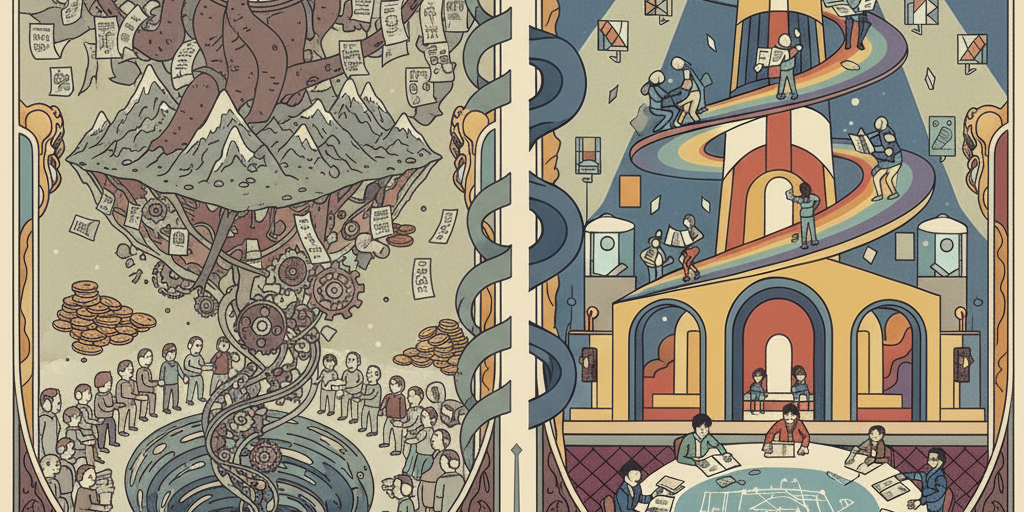
Organisations habitually reward tenure and ritual, not the reasoning that produces value. Replace performative ownership and endless research with outcome-linked incentives, decision gates and clear tests for new ideas.
Why are we so confident in "truths" that are actively sinking the ship?
What if the boldest ideas in your life are being silenced not by enemies, but by the very systems you trust to reward them?
Incentive architecture and the ownership myth
We build our teams on a comfortable foundation. We lean on the veterans, the "experienced" thinkers, assuming their tenure equals insight. We delay big moves, citing the need for "more research", a process that feels diligent but is often just a stall.
We preach "ownership," handing out stock options like magic tickets, promising a future payday that, for most, will never arrive. We tell ourselves this is how successful ventures are built. This is the script we follow.
We celebrate stock-option folklore while most contributors trade effort and time for speculative tickets that rarely pay. The loud winners on the financial pages obscure a quieter truth: control of the cap table concentrates value, not effort. Promises of ownership become theater when payoffs are disconnected from the work that created them.
At the same time, organisations reward repeatable experience and polished resumes, dismissing fresh reasoning because it smells unfamiliar. Comfort (steady pay, familiar protocols, the myth of “waiting for more data”) camouflages a distribution problem: alignment exists in rhetoric, not in measurable reward or decision practice.
The trenches: who really captures value
In the tech trenches, from garage startups to sprawling campuses, creators pour sweat into visions that could reshape worlds. Yet the spoils rarely trickle down fairly. Early coders at places like Atari or Apple gambled on stock slices that ballooned into fortunes, splashed across headlines as proof of the dream.
But dig deeper: those without leverage, the unsung grinders lacking clout or cash to demand their share, get sidelined. Options dangle like mirages, often evaporating while bankers and cap-table kings cash in reliably.
Meanwhile, fresh voices, untested but razor-sharp, pitch breakthroughs that clash with entrenched habits, only to be dismissed as naive. And hovering over it all? A fog of recycled myths: conspiracy-laced "truths" about success that moderators on platforms like Facebook unwittingly absorb after endless exposure, flipping skeptics into believers of baseless noise.
This isn't just unfair. It's a predator draining ingenuity from the edges where it thrives most.
The psychology of repetition and its costs
But what's terrifying is that the script is a lie. And the more we repeat it, the more we believe it. We’ve fallen victim to the "illusory truth." Like the content moderators who, after staring into the abyss of fringe conspiracies, start to believe the very theories they were hired to debunk, we've repeated "experience is everything" and "options create alignment" so often that we’ve become blind.
The cost is devastating. Fresh, powerful ideas from new voices are dismissed before they can breathe, simply because the source is inexperienced, even when their reasoning is flawless. We remain stuck in old ways while our "research" becomes an excuse for inaction.
And that "ownership"? It becomes a bitter joke when the only people who truly profit are the financiers and those closest to the cap table, not the individual contributors who traded their effort for a ticket that was never designed to win.
The result is slow rot. Talent drains away, risk-taking evaporates, and capable people learn to game optics rather than produce value. Teams live inside comforting narratives that feel true because they are repeated, not because they’re checked, so false certainties spread and good contrarian ideas die by repetition.
Meanwhile, “let’s gather more research” becomes a polite excuse to postpone real choices, turning curiosity into procrastination. Innovation stalls; morale erodes; the people closest to problems stop speaking up because the system rewards patience, not decisive contribution.
Ignore this rot, and watch potential wither: brilliant minds stall in paranoia, haunted by fabricated fears that erode trust and spark isolation. Procrastination creeps in, disguised as "needing more data," turning decisive leaps into endless loops of hesitation.
The toll? Careers derailed, innovations buried, and a collective frustration that simmers into burnout. Think of the moderator who starts eyeing shadows after sifting hate, or the newbie whose killer concept gets shelved because veterans can't unstick from outdated grooves.
Left unchecked, this cycle devours ambition, leaving hollow shells where vibrant futures once burned, and widening the chasm between the privileged few and the overlooked many.
Concrete prescriptions for alignment and decision hygiene
The breakthrough isn't a complex new system. It’s a ruthless commitment to reality. It’s the realisation that endless "research" is often just procrastination in a suit. It’s training ourselves to have a "good ear", to listen for sound reasoning, not just a familiar title or a long resume.
Most importantly, it’s admitting the magic ticket is broken and replacing it with something radically simple: true alignment. Stop promising hypothetical fortunes. Start writing down exactly what success looks like for a project, and then tie significant, tangible bonuses directly to that specific, relevant outcome.
Stop treating ownership as a lottery ticket. Tie meaningful upside to concrete, observable outcomes: write down exactly what success looks like, then attach significant, outcome-linked rewards to those measures. Invite and evaluate ideas on the strength of reasoning, not tenure; inexperienced voices should be judged by clear criteria because fresh reasoning often outperforms ossified habits.
Counter the repetition trap by forcing dissenting evidence into every decision loop and by tracking how often claims survive independent checks. Finally, replace open-ended “more research” with decision gates, short deadlines and small experiments that expose procrastination disguised as prudence.
Tune your instincts to spot gold in unpolished voices, even if they're green, because rigid experience often blinds while fresh reasoning cuts through. Ditch the opaque lottery of equity for direct ties: link real rewards, like outcome-driven bonuses, to clear metrics of success everyone can track.
And pierce the haze of repeated lies by questioning what "feels true" after bombardment. Recognise that urge to delay as fear in research's clothing, and act swiftly on what aligns teams in genuine pursuit.
Vision
Imagine this: A workplace where you are judged on the quality of your thinking, not the length of your resume. A culture where you are rewarded directly and meaningfully for the precise value you create, not with a lottery ticket you can't control.
Imagine a landscape where ideas ignite without gatekeepers' bias, yielding teams in sync, creators thriving on tangible wins, and breakthroughs flowing freely, free from myth-fueled doubts or unequal grabs. Frustrations dissolve into fuel, birthing ventures that uplift all hands involved, with clarity replacing chaos and equity mirroring effort.
So, look at your own team. Where are you delaying action with "research"? Whose voice are you ignoring because they lack "experience"? And what one "magic ticket" can you replace today with a clear, written, and truly aligned outcome?
Imagine teams where effort maps to reward, where junior insight is routinely surfaced and acted on, and where beliefs must pass public tests before they calcify. Decisions speed up without sacrificing rigour because evidence, not repetition, earns trust. Productivity climbs, retention improves, and the organisation reclaims the upside it once promised only in press releases.
This isn't a fantasy. It's a choice to stop repeating the convenient lies that keep us comfortable and stuck. It's a future built on equity that is actually equitable.
Pick one measurable outcome you care about, write a two-sentence success definition, commit a meaningful bonus to that outcome, and promise to pilot one idea proposed by someone with less tenure than you.
If you want, I’ll help you draft the outcome statement and the experiment: concise, measurable, unavoidable. Audit your own circles for dismissed sparks, redefine rewards around shared victories, and commit to one bold, inexperienced idea this week: test it, own it, and watch the shift unfold.
The Essential Concepts
The Broken Incentive Architecture
The fundamental problem is an Incentive Architecture that habitually rewards tenure and ritual, not the reasoning that produces value, leading to decisive paralysis.
- Illusory Truth (Psychological Diagnosis): The phenomenon where repetition (of myths like "experience is everything" or "options create alignment") makes a claim feel true, regardless of evidence. This makes us blind to the fact that the script is a lie.
- Ownership Myth: The lie that stock-option folklore and handing out options (the "magic ticket") creates genuine alignment. The reality is that control of the cap table concentrates value, not effort, making ownership a bitter joke for individual contributors.
- The Repetition Trap: Fresh, powerful ideas from new voices are dismissed simply because the source is inexperienced or the idea is unfamiliar, even if the reasoning is flawless. This is often disguised as a need for "more research," which is procrastination in a suit.
Prescriptions: Alignment, Decision Gates, and Outcome-Linked Rewards
The breakthrough is a ruthless commitment to reality by replacing the broken system with structural choices that reward and test sound reasoning.
- True Alignment Framework: Replace the opaque lottery of equity/options with Outcome-Linked Incentives. Tie significant, tangible bonuses directly to specific, relevant, measurable outcomes for a project.
- Decision Hygiene: Stop open-ended "more research" with Decision Gates (short deadlines) and small experiments that expose procrastination disguised as prudence.
- Competence over Comfort (The "Good Ear"): Train your instincts to listen for sound reasoning, not a familiar title or long resume. New ideas should be evaluated on the strength of their logic, regardless of the source's tenure.
- Counter the Repetition Trap: Actively force dissenting evidence into every decision loop and track how often claims survive independent checks.
Practical Start Steps
To stop repeating convenient lies and replace the "magic ticket" with truly aligned action, commit to these three moves:
- Define and Align Success: Pick one measurable outcome you care about, write a two-sentence success definition, and commit a meaningful bonus directly to that outcome.
- Pilot Fresh Reasoning: Promise to pilot one idea proposed by someone with less tenure than you (judged on reasoning, not experience).
- Gate Inaction: Replace a current open-ended "more research" request with a short deadline and a clear, falsifiable test to force progress.
I am a Knowledge Worker...
What does it mean for me?
You are operating under a Broken Incentive Architecture that rewards comfortable tenure and ritual over sound reasoning, leading to decision paralysis and The Repetition Trap.
Your biggest risk is internalizing the Illusory Truth that the veterans' experience or the company's Ownership Myth (stock options as a "magic ticket") guarantees success, causing you to dismiss fresh, powerful ideas—potentially your own.
"More research" is likely just procrastination in a suit, causing innovation to stall. The opportunity lies in forcing True Alignment by championing Outcome-Linked Incentives for your projects.
By developing a "Good Ear" (Competence over Comfort) to judge ideas on logic, not seniority, and introducing Decision Gates, you can cut through the noise, accelerate key projects, and position yourself as an essential contributor who produces measurable value, not just busyness.
How do I action this?
- Pilot Fresh Reasoning (Counter the Repetition Trap): Identify one idea proposed by a colleague with less tenure or less established reputation than you, but which has flawless reasoning. Commit to using your influence to pilot that idea in a small, contained experiment, actively demonstrating Competence over Comfort in your evaluation.
- Define and Align Success (Outcome-Linked Incentives): For your top-priority project, write a two-sentence success definition that is measurable, unavoidable, and directly linked to a business outcome (e.g., "Success is reducing customer churn by 10% within 60 days, verified by the BI dashboard"). Propose that any project bonus be tied directly to this definition.
- Gate Inaction (Decision Gates): Identify one active task currently stuck in an open-ended "let's gather more research" state. Immediately replace the request for more data with a Decision Gate: set a strict 7-day deadline and define a clear, falsifiable test (a small experiment) that must be run to either prove or kill the idea.
- Counter the Repetition Trap (Evidence over Tenure): In your next team decision meeting, actively force dissenting evidence into the loop. If the group is leaning heavily on a veteran's opinion, ask, "What one piece of evidence could appear tomorrow that would falsify our current consensus?" and document the answer.
I am a Freelancer, Solopreneur, Entrepreneur, Independent Worker...
What does it mean for me?
You are constantly fighting a personal Incentive Architecture that defaults to comfort, rewarding "safe" work over necessary risk.
This manifests as the Repetition Trap where you repeat familiar but unsuccessful strategies, fueled by the Illusory Truth of popular Ownership Myths found in the Noise Economy (e.g., chasing viral tactics).
Your feeling of needing "more research" before launching is procrastination in a suit, creating decisive paralysis.
Since the "magic ticket" of stock options is irrelevant, your true value is protected by securing True Alignment with clients through Outcome-Linked Incentives.
By applying Decision Hygiene and listening with a "Good Ear" (Competence over Comfort) for sound reasoning, you can stop rewarding your own fear and start executing the high-value, high-risk work necessary for business sustainability.
How do I action this?
- Pilot Fresh Reasoning (The Repetition Trap): Identify one strategy you’ve avoided because it felt unfamiliar or was proposed by a source lacking "traditional" experience (e.g., a competitor with less polish but better logic). Commit to piloting that strategy in a small experiment this week, judging it solely on the strength of its reasoning and evidence.
- Define and Align Success (Outcome-Linked Incentives): For your next client contract or business goal, write a two-sentence success definition that is measurable and specific (e.g., "Success is increasing qualified leads by 20% within 45 days, verifiable via the CRM report"). Use this definition to frame your value and, where possible, link a tangible bonus to achieving it (True Alignment Framework).
- Gate Inaction (Decision Gates): Pick one current business problem that is stuck in open-ended "more research" (e.g., "Should I launch a product?"). Immediately set a strict 48-hour deadline to define a small, falsifiable experiment that answers the core question (e.g., "Get 10 pre-orders by end of week, or pivot").
- Curate Input (The "Good Ear"): Before your next high-stakes decision (e.g., setting price or niche), intentionally seek out one dissenting voice—a critique of your plan from someone with a strong track record—to actively force dissenting evidence into your decision loop. Counter the Illusory Truth by actively welcoming skepticism.