Friction Inverted: Why Discipline is a Finite Fuel.
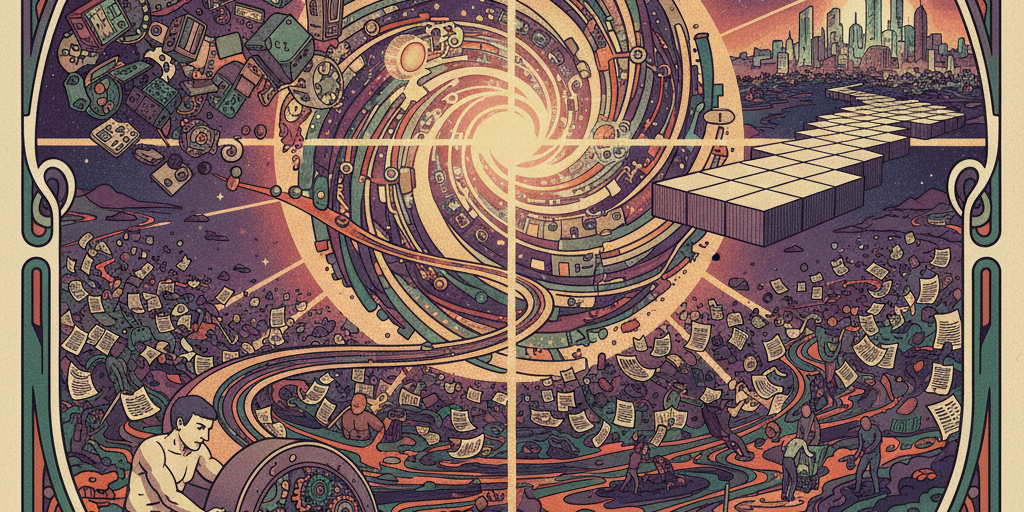
You are paying a compound tax on "busy" while waiting for perfect data. Here is how to replace the grind of discipline with the escape velocity of obsession. Most teams are moving a hundred things an inch rather than one thing a mile. Stop accumulating the debt of delay and make the one irreversible decision you’re avoiding.
Is your "discipline" actually just a lack of strategy wearing a badge of honour?
Are you silently squandering tomorrow because you’re comforted by the illusion of motion today?
What would happen if you kept chasing tomorrow’s “perfect” plan instead of acting on the one idea that’s already burning inside you?
The Illusion of Motion
Tactics multiply when strategy is silent. In a healthy system, tactics are experiments that generate data for a larger plan. But most teams live in a loop of reaction, chasing the newest move without ever explaining what it’s meant to validate. Meanwhile, the habit of postponing hard conversations and structural fixes breeds a slow, compound tax on cash and trust.
We lean entirely on blind discipline, what Chris Williamson calls "friction accepted." It works, but without a clear map, the price is exorbitant; it burns energy and creates resistance. We drag ourselves forward using willpower and routines, playing with the "tactic of the moment" while our actual strategy remains hidden or nonexistent. We are busy moving many things a little and nothing decisively. We are simply paying a high tax on a flawed approach.
Most of us live in an illusion of productivity: polished dashboards and the reassuring hum of “busy.” Yet beneath that veneer lies a drift toward “later.” We convince ourselves we need more data or a clearer signal before we move. This inertia leaves projects, relationships, health goals, and that quiet ambition you’re too scared to name forever unfinished. You keep working harder in the same fractured system and call that progress.
The Math of Hesitation
While you grind, you are likely accumulating the "Debt of Delay." You tell yourself you’re waiting for "more information." Unless the decision is irreversible, you’re likely just avoiding the anxiety that comes with acting on incomplete data.
As Ray Dalio observes, many make decisions when their odds of being right are just 51%—barely better than a coin flip. Stress-testing your thinking to raise those odds to 85% yields a value gain seventeen times greater. Therefore, ignoring this math and avoiding broken operations or toxic partnerships does not stop the problem.
Delay is not neutral. Small friction (a missed deadline, a half-baked hire, technical debt, or a vague “let’s wait”) grows into broken processes and lost customers. Indecision corrodes confidence; professionally, it costs equity and opportunity that do not return. When you accept “good enough” without raising the probability that you’re right, you trade potential wins for an occasional lucky hit. When obsession for one thing never arrives, you drain discipline until the team burns out. The result is wasted months and stalled launches.
The Pivot: Friction Inverted
The way out isn't to "try harder." It is to change your energy source. You need to stop waiting for motivation and transcend simple discipline. While both are useful tools, they are finite resources. Obsession is friction inverted; the work pulls you. It is a temporary state where you get output without negotiation.
Most people suppress this, trying to "balance" their lives just when curiosity and reward align. While unchecked obsession burns you out, controlled intensity is the only way to escape velocity. You don't live here forever, but you must visit to win.
- Probes over Tactics: If you cannot name your strategy yet, treat your next tactic as a probe, not a solution. Use it to gather the data that defines the path.
- Increase the Odds: Gather information and stress-test your assumptions until your confidence moves to meaningful probability.
- The Mile vs. The Inch: Most of your work should only move an inch—that’s maintenance. Your job is to identify the one outlier where a mile of progress changes your trajectory.
- The Residual Effect: When a beneficial obsession appears, use it long enough to build the behavior into identity; when it fades, let the residue (systems and skill) carry you forward.
Treat delay as a line item: dollarize it and date it. Dollarize the cost of your drift. If you are waiting strategically, write down the trigger. Otherwise, you are just paying a premium for comfort. Take one irreversible, forward action in the next 48 hours. Those moves shift expected value more than another round of debate.
The Residue
When you use obsession to drive progress, a transformation occurs. What looks like discipline in successful people is often the residue of a past obsession. By the time that initial energy runs out, you have built the systems and skills to keep going without the grind. You trade the exhausting friction of indecision for the clean, necessary friction of doing the work that actually matters.
Announce your strategy so every tactic you and your team invent has meaning. This focus allows one project to move a mile instead of a hundred things moving an inch. This approach results in less noise and more leverage, where systems keep delivering even when moods fail.
Name the one thing you are avoiding today and feel the weight of it. Within the next 48 hours, take one irreversible step that makes turning back impossible: send the email, fire the person, sign the deal, or schedule the audit. Let the momentum you create become the new baseline so the debt of delay disappears.
The Essential Concepts
The Illusion of Motion: Tactics vs. Strategy
When strategy is absent, tactics multiply. Most teams are "efficiently busy," moving a hundred different projects by an inch, which creates the sensation of progress without the reality of a breakthrough.
- Tactics as Probes: In a high-functioning system, a tactic is not the goal; it is a probe used to gather data to define the strategy.
- The Busy Trap: We use willpower to drag ourselves through routines, assuming that if we work harder, the lack of a clear map won't matter. This "friction accepted" model is a finite fuel that eventually leads to burnout.
- Strategy Silence: If you cannot explain why you are doing a specific task, you are likely paying a "compound tax" on your energy.
The Math of Hesitation: Raising the Odds
Delay is rarely neutral; it is a line-item expense. We often wait for "perfect data" to avoid the anxiety of an imperfect decision, but the math of expected value argues for speed over certainty in reversible choices.
As Ray Dalio suggests, the delta between a "coin flip" decision and a "stress-tested" decision is massive. If we represent the probability of being right as P:
- The Blind Guess: P(Success) = 0.51
- The Stress-Tested Move: P(Success) = 0.85
While the difference in probability seems small (34%), the Expected Value (EV) and the resulting confidence gain can be up to 17 times greater when you move from 51% to 85% by gathering high-signal information quickly.
Friction Inverted: Obsession as Escape Velocity
Discipline and motivation are finite resources; they require constant negotiation with yourself. Obsession is different—it is "friction inverted," where the work itself pulls you forward.
- Escape Velocity: To break out of a stagnant loop, you need a period of controlled intensity. You don't live in this state forever, but you must visit it to achieve a breakthrough.
- The Residual Effect: What the world calls "discipline" in masters is often just the residue of past obsessions. Once the initial fire of obsession fades, it leaves behind the systems, skills, and identity that allow you to continue without the grind.
- The One-Mile Pivot: Most work should be maintenance (moving an inch). Your primary job is to find the one outlier where a "mile" of progress changes everything.
The "48-Hour Irreversible" Protocol
To stop accumulating the "Debt of Delay" and switch your energy source, execute these three shifts:
- Dollarize the Drift: Calculate the literal cost of waiting another month to make that one decision you’ve been avoiding. Put a price tag on your comfort.
- Name the Avoiding: Identify the one conversation, hire, fire, or deal you are currently hiding from behind a "polished dashboard."
- The Irreversible Step: Within the next 48 hours, take one action that makes turning back impossible. Send the email, sign the contract, or delete the "Plan B."
"Discipline is the fuel for the start; systems are the engine for the finish; but obsession is the spark that creates the fire."
I am a Knowledge Worker...
What does it mean for me?
In a corporate setting, you are likely trapped in Polite Stagnation, where you move a hundred projects by an "inch" through sheer willpower—what we call Friction Accepted.
This creates an Illusion of Motion: you are clearing inboxes and attending meetings, but your Strategy Silence means you are merely reacting to the loudest pings.
This "Busy Trap" is a finite fuel; you are burning energy to maintain a flawed approach while accumulating the Debt of Delay on the one high-stakes project that would actually secure your next promotion.
By waiting for "perfect data" to make a move, you are ignoring the Math of Hesitation. Stress-testing your ideas to move from a "coin flip" (51% certainty) to a high-signal move (85%) provides a massive Expected Value gain.
If you don't find the One-Mile Pivot—that outlier task where a decade of progress can be made in a month—you will remain a "switchboard" for everyone else's tactics.
You must stop using discipline as a "badge of honor" and start engineering a period of Controlled Intensity to build the Residual Effect: a reputation and a system that carries you forward even when your motivation fails.
How do I action this?
- Execute a "Tactic-as-Probe" Audit: Look at your top three recurring meetings. If you cannot explain the larger plan they serve, treat the next one as a Probe. Use it specifically to gather the data needed to define your Strategy, or cancel the meeting entirely.
- Dollarize the Drift of Your Career: Pick the one promotion or project you've been "preparing for" for months. Calculate the literal cost of another month of hesitation (salary gap, missed market windows). Assign this price tag to your comfort and use it to fuel a 48-hour Irreversible Step.
- Identify the "One-Mile" Outlier: Look at your Q1 goals. Identify which single objective has the potential to move your career a "mile" rather than an "inch." Dedicate your highest-energy blocks to this Controlled Intensity phase, delegating or deferring the maintenance tasks.
- Commit to the 48-Hour Protocol: Name the one conversation or "unpolished" proposal you are avoiding. Send the email or schedule the audit within 48 hours. By making the decision Irreversible, you eliminate the mental negotiation that drains your finite discipline.
I am a Freelancer, Solopreneur, Entrepreneur, Independent Worker...
What does it mean for me?
As an independent, Strategy Silence is a terminal business risk. You are likely "polishing dashboards" and tweaking your website while your actual business remains stagnant.
This is Tactics Multiplying, where you use busyness to mask the anxiety of not having a clear map.
You are currently paying a Compound Tax on your energy by trying to do everything, rather than finding the "Friction Inverted" state of Obsession.
Without this spark, your business will hit a wall where you can no longer support its own weight through raw grit.
To scale, you must move from "Friction Accepted" to Escape Velocity. This means taking one Irreversible Step that makes turning back impossible.
You don't need to live in a state of high intensity forever, but you must visit it to build the Residual Effect—the automations, skills, and client reputation that function as your "Residual Engine."
By raising your odds from 51% to 85% through rapid, small experiments, you trade the exhausting friction of "figuring it out" for the clean, necessary friction of high-leverage growth.
How do I action this?
- Execute the "One-Mile" Pivot: Audit your current client list and service offerings. Identify the one outlier—the "one thing already burning inside you"—that could change your trajectory. Pivot your resources to move this one thing a mile, even if it means letting other "inch-long" projects stall.
- Dollarize the Cost of Inaction: Calculate the cost of not launching that product or raising those rates. Compare the Expected Value (EV) of moving now with 85% confidence versus waiting six months for 100% certainty. The math favors the Sooner Risk.
- Perform a "Residual Effect" Build: Use a burst of Obsession this week to build one permanent system (an onboarding sequence, an automated lead filter, or a documented SOP). Once the obsession fades, ensure the Residue of this system carries the business forward without your manual intervention.
- Take the 48-Hour Irreversible Move: Name the one deal or hire you’ve been "researching" to death. Sign the contract or fire the underperformer within the next 48 hours. This shift converts your Debt of Delay into immediate market data.