Designing Scarcity: A Strategic Playbook for Turning Utility into Durable Economic Moats.
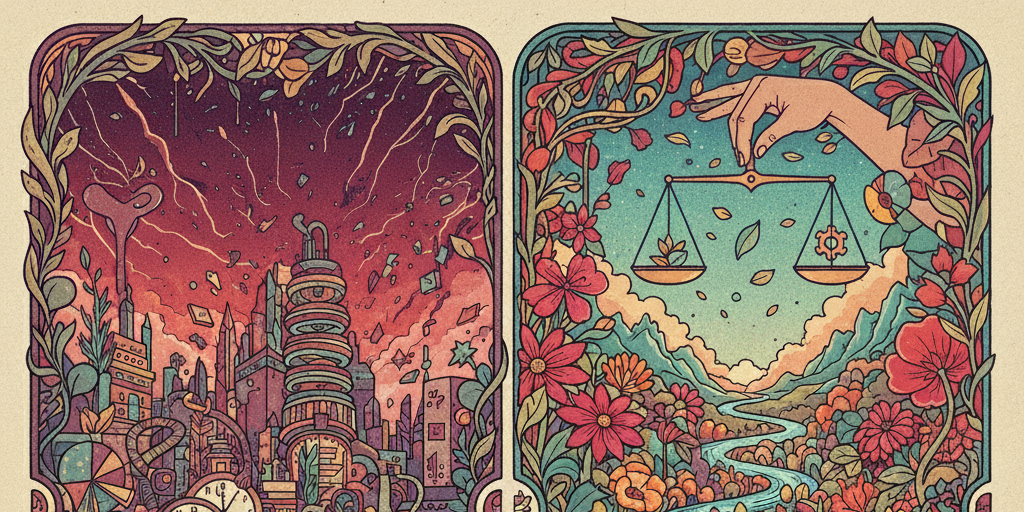
The internet rewards immediacy; markets reward structural advantage. Replace binary judgement with disciplined observation, design scarcity into your product, and run short experiments that preserve optionality.
Is your obsession with how things "should be" blinding you to how they actually are?
What if every triumphant metric on your dashboard is a vote for a future that quietly bankrupts your advantage?
What if everything you think is “progress” is actually keeping you chained to the same stale routine?
The Seduction of “Should” Thinking: When Usefulness Becomes a Trap
We are living in a hallucination of hot takes and moral certainties. We scroll through feeds that convince us the world is binary. Heroes and villains, right and wrong. And that our primary job is to act as the jury. It feels productive. It feels righteous.
But this is a trap. We are confusing the internet for the real world, forgetting that a viral outrage cycle has as much bearing on reality as a rumor that "skinny is out of style."
We act like being "correct" or "useful" is enough to succeed. But as Seth Godin warns, utility is a commodity. Just as e-bikes are transforming cities yet struggling to turn a profit, your "correct" opinions are everywhere, easily replicated, and hold zero scarcity value.
We spend our days manufacturing outrage, thinking we are building a legacy, when we are really just churning out commodities in a saturated market of noise.
We celebrate solutions that are useful and needed, then wonder why profit margins vanish. Practical products solve real problems but often compete on price because they lack scarcity, network effects, or protection from commoditisation.
At the same time, leaders cling to how things should be, letting personal narratives and tribal applause drown out what actually works. Add a culture of constant cheerleading or condemnation about performance where every compliment carries an implicit criticism and you end up with teams that can’t learn clearly.
Online noise amplifies this: controversy brings eyeballs and temporary clout, while real, steady reputation-building goes unpaid. The result is a steady drift toward brittle strategies that look busy but are shallow.
We live in a world that celebrates convenience: e‑bikes zip through streets, algorithms promise personalised feeds, and endless “growth hacks” flood our inboxes. On the surface it feels like freedom, yet the underlying flaw is glaring. These solutions are commodities, stripped of scarcity, network effects, or any real moat. They deliver utility, but they rarely build sustainable value.
At the same time, our minds are hijacked by binary judgments. We label outcomes “good” or “bad” based on how they affect us personally, ignoring the broader ecosystem. This tunnel vision fuels tribalism, fuels endless online drama, and turns every disagreement into a battlefield. The result? A culture that rewards short‑term buzz over lasting impact, and a personal life that feels perpetually unsettled.
The Hidden Cost of Judgment
This addiction to judgment is charging a tax you can’t afford. It isolates you from the truth and drains your mental reserves. Ray Dalio learned this watching a pack of hyenas take down a wildebeest. His visceral reaction was horror. He judged the event as "bad."
But nature doesn't optimise for the individual’s comfort; it optimises for the whole. By clinging to your emotional bias of what is "fair," you miss the mechanics of how the system actually works.
Every time you rush to label something, you engage in a "soft signal of ineffectiveness." You might feel superior, but you are losing your ability to persuade or build. You become a gossip columnist rather than a creator.
You waste hours dying on hills you discovered two minutes ago, defending half-baked opinions just to feel part of a tribe. The cost isn't just lost time; it’s lost sanity. You are trading your peace for a hit of dopamine, leaving you exhausted and blind to the second- and third-order consequences of reality.
That drift is costly. You pour time and capital into products that win popularity but not durable demand. Teams copy the loudest playbooks and lose craft.
Decision-making gets hostage to bias: you defend “shoulds” instead of testing reality, and you punish experiments that don’t look pretty. Emotion replaces evidence; morale frays; churn rises. Reputation converts into headlines, not customer loyalty.
Meanwhile, competitors who design for scarcity and network effects quietly capture the profitable edges. Every month you tolerate this pattern, you trade optionality for volatility.
Every day the cost compounds. The more we chase the next viral trend, the more mental bandwidth we surrender to noise. Judgment tightens our thinking, stifles intuition, and erodes the natural learning loop that thrives on clear, unbiased observation.
Meanwhile, businesses built on pure utility drown in commoditisation, struggling to turn traffic into profit because they lack the scarcity and network effects that protect true value. The endless cycle of hype, backlash, and burnout drains creativity, saps confidence, and leaves us wondering whether any of this “progress” ever truly serves the whole.
Radical Neutrality as a Strategic Advantage
The pivot point is radical neutrality. It is the realisation that positive and negative judgments are two sides of the same suffocating coin. As Gallwey discovered in the "Inner Game" of tennis, telling yourself a shot was "good" is just as dangerous as calling it "bad," because both invite the ego to interfere with intuition.
To see reality, you must remove the glasses entirely, not just the dark ones, but the rose-tinted ones too. You have to stop asking, "Is this right?" and start asking, "What is actually happening?" It’s about moving from emotional reactance to analytical observation.
It’s realising that the most compelling arguments are the gentle ones, and that true effectiveness comes from dialing back the aggression to understand the machinery of the world as it is, not as you wish it to be.
Change starts with ruthless, humble observation. Assume your model is wrong until proven otherwise. Stop judging actions as simply good or bad; see what actually happened and ask clear, non-binary questions: “Why did this move the needle?” “What changed between runs?”
Use those answers to design constraints that create real scarcity (exclusive features, licensed partnerships, or tight supply), catalyse network effects (structures that make each new user more valuable), and build insulation from commoditising forces.
Simultaneously, refuse the adrenaline of controversy. Don’t trade reputation for provocation. Cultivate environments where feedback is descriptive, not moralising, so intuitive performance can surface and improve. Test ideas in the messy real world and let system-level consequences, not preferences, guide choices.
Imagine flipping the script: stop chasing external validation and start cultivating an internal, judgment‑free lens. By observing actions exactly as they unfold, without labeling them good or bad, we free the subconscious “Self 2” to guide us with fluid, instinctual precision.
From a business perspective, the breakthrough lies in marrying genuine demand with strategic scarcity and network effects. Instead of merely supplying a useful product, we engineer a system where each user’s participation amplifies value for the collective, creating a self‑reinforcing loop that shields against commoditisation.
Building What Endures
Picture a landscape where ideas spread not through tribal outrage but through quiet, compelling resonance; where ventures thrive not because they’re the cheapest option, but because they embed scarcity and community into their core. In this world, you navigate challenges with calm clarity, harnessing the natural optimisation of the whole rather than the fleeting whims of the individual.
When you drop the heavy armour of judgment, you regain your agility. You stop fighting gravity and start learning to fly. You no longer waste energy on performative battles or tribal signaling, freeing up your resources to build something with true insulation and network effects, a life and business that can’t be easily copied.
You become an observer of the whole, seeing opportunities where others only see offenses. You achieve a state of flow where you can correct your course not by berating yourself, but by simply observing where the ball landed and adjusting.
Stop curating your "takes" and start curating your clarity. Step off the hill you were ready to die on, walk into the valley of reality, and build something that actually lasts.
Imagine a business where sales grow and margins follow; where product decisions are guided by experiments, not ego; where your public voice reflects work instead of wars. Teams learn faster because judgments have been traded for curiosity. Your brand is known for what it builds, not who it insults. The market rewards scarcity and network value; your strategy becomes harder to copy.
Pick one offering and map whether it’s scarce, protected by network effects, or insulated from pure price competition. Run a two-week experiment that treats your favourite assumptions as hypotheses: record outcomes, ask non-judgmental questions, and iterate. Quiet the impulse to amplify controversy for attention; amplify evidence instead. If you do this, you’ll stop celebrating motion and start preserving advantage.
Audit one product this week. Observe without praise or blame. Then redesign one constraint that makes it harder to copy. That single disciplined move shifts you from chasing applause to building endurance.
Break free from the endless cycle of noise and commodified work by:
- Observing your actions without judgment: note what truly works before labeling it.
- Designing your projects around scarcity and network effects, turning users into co‑creators.
- Choosing substance over spectacle: let your work speak louder than any controversy.
Pause, reflect, and redesign. Your next move could be the catalyst that transforms not just your own path, but the ecosystem you inhabit.
The Essential Concepts
The "Should" Trap: The High Cost of Judgment
We often mistake moral certainty for strategic progress. This "addiction to judgment" acts as a silent tax on effectiveness.
- The Hallucination of Certainty: We confuse the viral outrage of the internet with the mechanics of reality. Being "correct" or "useful" is no longer a competitive advantage; it is the baseline.
- The Individual vs. The System: Ray Dalio’s observation of nature (the hyena and the wildebeest) teaches that while an event may be "bad" for the individual, it is often part of an optimised system. Judging it prevents you from understanding the machinery.
- Soft Signals of Ineffectiveness: Every time you rush to label an outcome "good" or "bad," you engage the ego. This interferes with intuition and slows down the learning loop. As in the "Inner Game" of tennis, labeling a shot invites the conscious mind to interfere with instinctual performance.
The Utility Trap: Why "Good" isn't Enough
Practical products solve problems, but they often struggle to turn a profit because they lack a structural barrier to entry.
- Utility is a Commodity: If your product is merely "useful," it competes on price. Seth Godin’s e-bike example illustrates this: a transformative technology that struggles to find a profit margin because it lacks scarcity.
- The Erosion of Edge: When you chase popularity or tribal applause, you build a "brittle strategy." You trade optionality for volatility, becoming a gossip columnist for your industry rather than a creator of value.
- The Network Effect Advantage: Durable value is built when each new user makes the system more valuable for everyone else. Without this self-reinforcing loop, you are simply "churning out commodities" in a noisy market.
Radical Neutrality: The Strategic Pivot
The breakthrough comes when you stop asking "Is this right?" and start asking "What is actually happening?"
- Analytical Observation: Remove both the dark and the rose-tinted glasses. Effectiveness comes from understanding the world as it is, not as you wish it to be.
- Descriptive Feedback: Cultivate environments where feedback is descriptive rather than moralising. This allows intuitive performance to surface and improve without the weight of judgment.
- Designing Constraints: Use your observations to build insulation from commoditisation. Real scarcity isn't accidental; it is engineered through exclusive features, tight supply, or licensed partnerships.
Your Strategic Playbook: The Scarcity Audit
To transition from chasing applause to building endurance, execute these steps this week:
- The Neutral Audit: Observe your primary product or service without using words like "good," "bad," "success," or "failure." Write down three sentences describing purely what is happening in the user experience.
- Map the Moat: Ask three non-binary questions:
- Why does this move the needle?
- What changed between the last two iterations?
- How does one more user make this better for all existing users?
- Redesign one Constraint: Identify one part of your offering that is "easy to copy" and redesign a constraint that makes it scarce or harder to replicate.
- Refuse the Adrenaline: Identify a current controversy in your field. Deliberately choose not to provide a "take." Instead, spend that energy gathering evidence of what actually works.
I am a Knowledge Worker...
What does it mean for me?
In a corporate setting, you are likely trapped in the Utility Trap.
You have been conditioned to believe that being "useful" and "correct" is the path to career growth, but in a world of infinite tools, simple utility is a commodity.
If your role is merely about being practical, you lack scarcity value and become easily replaceable.
This is often worsened by the "Should" Trap—an addiction to judging company decisions or office politics as "good" or "bad."
These judgments act as Soft Signals of Ineffectiveness that trigger your ego and interfere with Analytical Observation, preventing you from seeing the actual mechanics of how your organisation operates.
To gain a durable edge, you must pivot toward Radical Neutrality. By dropping the "hallucination of certainty" and binary labels, you free your intuitive Self 2 to see the Individual vs. The System dynamics clearly.
Your goal is to move beyond being a "useful" cog and start engineering structural advantages, such as niche expertise or internal network effects where your work becomes more valuable as more departments interact with it.
Failing to make this shift leaves you with a brittle strategy that relies on tribal applause rather than a truly unique, hard-to-copy professional moat.
How do I action this?
- Conduct a Neutral Audit of Your Performance: Describe your current primary project using only Descriptive Feedback. Write three sentences that exclude words like "success," "failure," "good," or "bad." (e.g., "The report was delivered 2 hours after the deadline, and 4 out of 5 stakeholders provided comments on the financial section"). This allows you to see the raw machinery of your work without the "tax of judgment."
- Identify and Map Your Internal Moat: Ask yourself: "How does my presence make the rest of the team more valuable?" If you are only providing utility, you are at risk. Redesign one part of your workflow to create a Network Effect Advantage—for example, by building a shared knowledge base or process that becomes more efficient the more your colleagues contribute to it.
- Practice Analytical Observation on a Corporate Conflict: Take a recent disagreement or "outrage" in your department. Refuse to take a side. Instead, list the second-order consequences of the event on the broader company. This builds your ability to understand the "optimisation of the whole" while others are distracted by emotional reactance.
- Redesign one Professional Constraint: Identify a skill you have that is "easy to copy." This week, commit to a Surgical Action to make it scarce. This could involve securing a specific internal certification, mastering a rare proprietary system, or forming a "licensed partnership" with another department to handle specific cross-functional tasks that others cannot replicate.
I am a Freelancer, Solopreneur, Entrepreneur, Independent Worker...
What does it mean for me?
As an independent, you face the Utility Trap every day.
If your product or service is just "useful," you are competing on price in a saturated market where Utility is a Commodity.
Many solopreneurs chase tribal applause or "should" thinking, which creates a brittle strategy that trades optionality for volatility.
This "addiction to judgment"—deciding which market trends are "right" or "wrong"—is a silent tax that isolates you from the truth of what your customers actually need.
The breakthrough lies in Radical Neutrality. You must stop asking "Is this launch good?" and start asking "What is actually happening?"
By removing the rose-tinted glasses of ego, you can begin Designing Scarcity into your business model.
Durable value isn't found in convenience; it’s found in Network Effect Advantages and engineered constraints that protect you from commoditisation.
Without this self-reinforcing loop, you are merely churning out commodities in a noisy market, waiting for a viral break that may never come.
How do I action this?
- Run a Scarcity Audit on Your Offering: List the components of your product/service. Identify which parts are "easy to copy" and which are protected by a moat. Redesign one constraint this week to create real scarcity—such as switching from an "always open" model to a "limited cohort" model or offering an exclusive feature that requires a specific partnership to deliver.
- Replace Moralising Feedback with Non-Binary Questions: When reviewing your latest launch or client feedback, avoid labels like "failure." Instead, ask: "What changed in the market between this run and the last?" and "Why did this specific variable move the needle?" This allows intuitive performance to surface without the weight of judgment.
- Map the Moat via Network Effects: Ask: "How does one more user/client make my service better for all existing users?" If the answer is "it doesn't," you are building a commodity. Implement one change—like a community forum or a referral system that rewards collective growth—to start building a self-reinforcing value loop.
- Refuse the Adrenaline of Controversy: Identify a current "hot take" or controversy in your niche. Choose not to provide a response. Instead, spend that saved energy gathering evidence of what actually works for your customers. Let your work speak through substance rather than spectacle to build a reputation that lasts.