Built to Be Right, Designed to Fail: How Defaults and Snap Judgments Drain Your Wins.
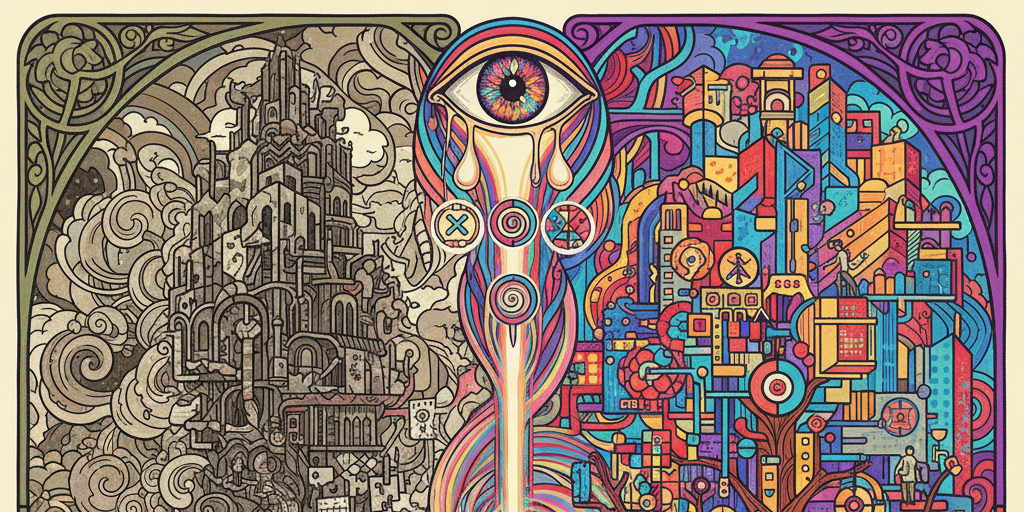
You can’t win from a position you’ve already lost. This essay shows how small defaults, early perks and snap judgments quietly strip capability. Stop piling on more evidence and start protecting what matters: attention, solitude, and good defaults. Three short questions and one enforced rule are the simplest place to begin.
What if everything you've been taught about changing minds is fundamentally wrong?
What are you trying to win if you don’t first stop losing the things that quietly make winning possible?
The Modern-Expert Paradox
We operate in a world that worships the decisive, rapid-fire intellect. We are armed with data, polished arguments, and airtight logic, beautifully equipped to engage in a battle of ideas. We form an impression in seconds and then spend the rest of our time and energy defending it, convinced that the weight of evidence will inevitably carry the day.
Yet, we find ourselves at an impasse. Our most reasoned points bounce off an invisible wall. We chase victory in conversations and projects, only to find ourselves exhausted and in the exact same position we started. This is the quiet frustration of the modern professional: being perfectly prepared for a world that, as it turns out, no longer exists.
We’ve been trained to measure success the loud way: launches, followers, quarterly wins. That noise comforts us until the scaffolding underneath creaks. Most people never notice the slow leaks: habits surrendered for convenience, small commitments traded for instant perks, the quiet erosion of independence disguised as “efficiency.”
Meanwhile a more dangerous force grows: the impulse to chase novelty without asking whether each new thing improves your life or simply compounds past choices.
Ask the three simple questions before you buy time, attention, or prestige: Compared with what? And then what? At the expense of what? Few do. Fewer still make rules that protect the small, easily lost things that compound into real freedom.
As Clear Thinking, by Shane Parrish, reminds us: it doesn’t matter what position you find yourself in right now. What matters is whether you improve your position today. Every ordinary moment is an opportunity to make the future easier or harder.
Solitude isn’t a weakness here; it’s the lens of clarity. Schopenhauer put it plainly: “He who does not enjoy solitude will not love freedom.” If you are allergic to being alone with your decisions, you will forfeit liberty for consensus, comfort, or constant inputs.
The elite operate and zero in on what must not slip away, guarding against invisible drains that erode progress. Every decision weighed through sharp filters: what's the real alternative? What ripple effects follow? And what's sacrificed in the trade-off?
We overlook how our beliefs aren't born from cold facts but from who we trust, adopting views from admired voices while dismissing others, even as evidence piles up. Add to that our snap judgments, forming gut reactions in moments and twisting everything else to fit, or the perks we cling to fiercely once tasted, impossible to relinquish without a fight. It's a world where the well-schooled strut confidently into obsolescence, outpaced by those who stay hungry to learn amid flux.
The Cost of Hidden Losses
This isn't just inefficient; it's a slow drain on our potential. Every hour spent crafting the "perfect" factual argument that fails to land is an hour lost forever. We see progress stall and relationships fray because we're playing the wrong game. We think we're debating facts, but the real causes of belief and disagreement operate on a much deeper, more primal level.
The mounting cost is measured in missed opportunities, fractured trust, and the slow, creeping realisation that our expertise has made us rigid. While the world changes, we find ourselves masters of a domain that has vanished, leaving us stranded by our own certainty. We are losing the most critical battles before we even know we are fighting them.
Loss aversion programmes us to protect what we already have even when that protection turns into stagnation. Offer a perk early and you’ve chained yourself; remove it later and you’ve bred resentment.
Small groups lose specific things; large groups gain abstract promises. Rules you create become defaults; they will nudge your future self whether you’re watching or not. People make instant judgments and then spend hours justifying them. Facts rarely rewire belief but trust does. So you end up defending narratives that serve your short-term comfort, not your long-term capacity.
Emotionally, this shows up as a worn-down confidence: irritation at change, secret envy of those who adapt, and a creeping sense that you’re always a step behind your better self. The cumulative effect is a life where the visible wins arrive on a thinner foundation and eventually the house collapses under weight it was never designed to bear.
Frustration mounts from rules we break for others but not ourselves, regret over intuitions rushed that lock us into flawed paths, and the quiet dread of becoming irrelevant, beautifully armed for a vanished era.
This blindness festers, turning small oversights into gaping wounds: opportunities squandered because we didn't pause to question the trade-offs, futures hardened by today's ignored chances to inch forward.
Feel the sting: that promotion chased at the cost of family ties fraying, or convictions locked in by tribal loyalties, leaving you isolated in echo chambers, unable to pivot when the ground shifts. Without reclaiming solitude's quiet power, true independence slips further, chaining us to crowds that stifle bold moves, amplifying losses until potential crumbles under unaddressed weight.
The Pivot: From Evidence to Trust, From Goals to Rules
The pivot point comes when we stop trying to be right and start understanding the hidden wiring of our minds. The breakthrough isn’t a new tactic; it's a Nobel Prize-winning revelation: we are not as rational as we think.
The reasons we give for our beliefs are often just stories we tell ourselves after the fact. Real influence isn't built on a mountain of evidence; it's built on a foundation of trust. If people admire you, they will find reasons to agree with you. If they don't, the best evidence in the world won't matter.
The path forward, then, isn't about amassing more knowledge, but about making slight, consistent improvements to our own thinking process. It begins with creating rules for ourselves, not goals or intentions, but hard-coded rules, like delaying our intuition until all the information is in.
This requires the kind of deep thought that can only happen in solitude, as Schopenhauer noted. Change the question from “How do I win?” to “What must I protect to even be in a position to win?” That shift is everything. It’s the moment you stop reflexively adding and start selectively subtracting.
Adopt these practices that change trajectories:
• Delay your intuition: wait for enough information before you lock in a judgment.
• Understand that your rules become your default. Make rules, not wishes: convert desired behaviour into defaults so your future self doesn’t negotiate.
• Recognise that Loss Aversion Creates Permanent Programs.
• Learn like a beginner: in Eric Hoffer’s words, “In times of change, learners inherit the earth, while the learned find themselves beautifully equipped to deal with a world that no longer exists.” Combine reverence for what came before with tiny, relentless improvement, as Magnus Carlsen describes: gather the masters’ lessons, then tweak them a little, every day.
• Accept that facts don’t form beliefs, people adopt views through trust and storytelling.
These are not abstract rules, they’re operational tools. Use them to redesign commitments, perks, and information flows so your defaults favor learning, autonomy, and resilience.
Rewrite your defaults with ironclad rules that reshape instincts, like delaying that lightning intuition until all cards are on the table, or drawing wisdom from history's giants to tweak and refine, building on proven secrets with humble increments.
Embrace the learner's edge in upheaval, trusting not just facts but the right guides to reframe beliefs, and carve out alone time to nurture that fierce autonomy. No matter your spot now, seize the mundane to nudge ahead. Sidestep permanent giveaways by starting lean, questioning every cost lens to reveal hidden paths forward.
Imagined Outcomes
Imagine a reality where you no longer waste energy on unwinnable arguments. Instead, you operate with a quiet confidence, knowing what you must avoid losing before you even begin to play for a win.
Imagine deciding from a place of less reactivity and more design: you keep what matters, add only after asking the three lenses of opportunity cost, and build rules that make good behaviour inevitable.
Every ordinary moment becomes an opportunity to make your future easier, not harder, because you've improved your position today. You stop being the learned expert, beautifully equipped for yesterday, and become the learner who inherits the earth. This is a state of profound clarity and freedom, where you are no longer a puppet of your own unconscious defaults.
Your journey starts not with a grand gesture, but with a simple, deliberate pause. Before your next important decision, before your next crucial conversation, ask yourself these three questions:
- Compared with what?
- And then what?
- At the expense of what?
This is how you begin to see the board clearly. This is how you stop reacting and start thinking.
You trade frantic accumulation for a margin that preserves freedom. Change is not painless, but it becomes survivable and eventually, liberating. You stop pretending every new feature or badge is necessary and start building a life that can actually sustain the pursuits you care about.
Imagine emerging unshackled: decisions sharpened, beliefs fluid yet grounded, progress compounding as you protect essentials and adapt swiftly, solitude fueling unyielding freedom. Losses minimised, wins amplified in a life where every step eases the next, outmaneuvering the rigid with agile insight.
Start with one simple move today: pick one rule that protects a scarce resource, your attention, your solitude, or your time, and enforce it for one week. When the temptation to break it comes, ask: Compared with what? And then what? At the expense of what? Delay the instant judgment. Learn from someone who’s been there and then improve what they taught you by a fraction. Do that enough, and the next set of “wins” will land on a foundation that can hold them.
Make the first rule now. Defend it. Learn. Repeat.
The Essential Concepts
Built to Be Right, Designed to Fail: We are often "built to be right" with data and logic, but we are "designed to fail" in a world that operates on a much deeper level. We are prepared for a world that no longer exists, where expertise makes us rigid and unable to adapt. The author notes that we chase visible wins while ignoring the slow leaks of our habits and independence.
The Cost of Hidden Losses: This mindset leads to a slow drain on our potential. We engage in unwinnable arguments because we believe facts will change minds, but the article reveals that trust is what truly influences belief. We are so consumed by winning the wrong battles that we lose the ones that matter, like preserving our attention and our ability to adapt. This leads to a "creeping sense of irrelevance" and a life where our expertise has trapped us.
From Goals to Rules: The breakthrough comes when we stop trying to be right and start understanding the hidden wiring of our minds. The solution is to create hard-coded rules for ourselves, not goals, to protect what truly matters. The article suggests that solitude is a crucial tool for this, as it allows for the deep thought needed to choose what to protect. The pivot is to stop reacting and start deliberately designing a life that is resilient.
The Three Questions: To apply this new mindset, the article suggests using three key questions as a filter for every important decision or new commitment:
- Compared with what? This forces you to consider the true alternatives.
- And then what? This forces you to think about the downstream consequences.
- At the expense of what? This forces you to confront the opportunity cost and what you are sacrificing. By using these questions, you can begin to see the playing field more clearly and make choices that improve your position, rather than simply maintaining a losing one.
I am a Knowledge Worker...
What does it mean for me?
The post warns that your habit of relying on data and logic to win arguments is a trap.
You may be "built to be right, but designed to fail" in a world that operates on trust, not facts.
The cost of these hidden losses is a slow drain on your potential, leading to a creeping sense of irrelevance as your expertise makes you rigid and unable to adapt to a changing workplace.
Instead of trying to win unwinnable arguments, the breakthrough is to make a pivot from goals to rules, creating a personal operating system that protects your most valuable assets.
Solitude is essential for this, as it provides the clarity you need to design your career deliberately and avoid being a puppet of your own unconscious defaults.
How do I action this?
- Create a Rule to Protect Your Focus: Identify one resource that is crucial to your success, such as your attention or your time. Create a simple, hard-coded rule to protect it. For example, "I will not check my email for the first 30 minutes of my workday." This makes a desired behaviour into a default, so your future self doesn't have to negotiate with it.
- Practice Delayed Judgment: In your next meeting or important conversation, make a conscious effort to delay your intuition. Before you voice your opinion or make a decision, wait until you have heard all the information and have asked at least one clarifying question. This practice prevents you from making a snap judgment and spending the rest of your time defending it.
- Filter Decisions with The Three Questions: Before you take on a new project or make a commitment, ask yourself the three questions: "Compared with what?", "And then what?", and "At the expense of what?" This will force you to consider the true alternatives, the downstream consequences, and the opportunity cost of your decision.
I am a Freelancer, Solopreneur, Entrepreneur, Independent Worker...
What does it mean for me?
The post warns that your habit of relying on data and logic to win arguments is a trap. You may be "built to be right, but designed to fail" in a world that operates on trust, not facts.
The cost of these hidden losses is a slow drain on your potential, leading to a creeping sense of irrelevance as your expertise makes you rigid and unable to adapt to a changing market.
Instead of trying to win unwinnable arguments, the breakthrough is to make a pivot from goals to rules, creating a personal operating system that protects your most valuable assets.
Solitude is essential for this, as it provides the clarity you need to design your business deliberately and avoid being a puppet of your own unconscious defaults.
How do I action this?
- Create a Rule to Protect Your Focus: Identify one resource that is crucial to your success, such as your attention or your time. Create a simple, hard-coded rule to protect it. For example, "I will not check my email for the first 30 minutes of my workday." This makes a desired behavior into a default, so your future self doesn't have to negotiate with it.
- Practice Delayed Judgment: Before you voice your opinion or make a decision on a new product or service, wait until you have researched the market and heard from potential customers. Before you jump to a conclusion, ask at least one clarifying question. This practice prevents you from making a snap judgment and spending the rest of your time defending it.
- Filter Decisions with The Three Questions: Before you take on a new project or make a commitment, ask yourself the three questions: "Compared with what?", "And then what?", and "At the expense of what?" This will force you to consider the true alternatives, the downstream consequences, and the opportunity cost of your decision.