Behind the Screen: How Short Horizons, Defensive Minds and Curated Output Hollow Collective Work.
Short horizons and curated presence hollow relationships. This essay maps the mechanics and proposes measurable habits that rebuild trust and learning. An anatomy of everyday isolation: how incentives, psychological defense and convenience replace commitment, and the concrete rituals that restore adaptive teams.
Why, in a world more connected than ever, do we feel so profoundly walled off from each other?
Who will do the thing they promised when doing it is neither easy nor convenient, when it costs time, reputation, or a missed short-term win?
What if the voice in your head that's always defending you is the very thing trapping you in silence?
Structural causes: “Convenience Economies and the Visibility Gap”
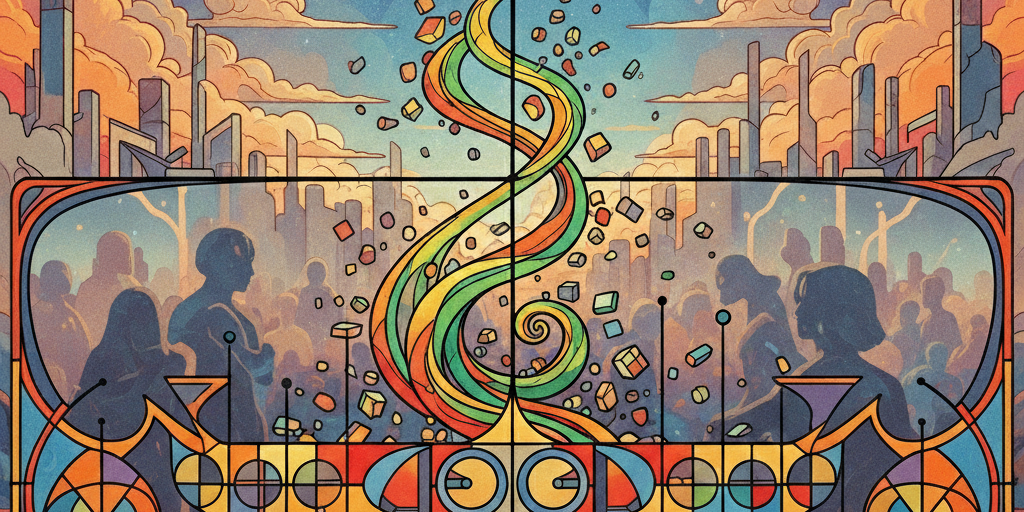
We live our lives behind glass. We scroll through the curated lives of others from behind the windows of our screens, and in turn, present our own polished reflections. We find ourselves in rooms full of people, yet feel a strange and uneasy separation, like figures in an Edward Hopper painting: together, but uncommunicative and fastened into poses of distress.
This is the great paradox of modern life: a feeling of being simultaneously penned in and yet unbearably exposed. The burden isn't just a fleeting mood; it's a persistent, gnawing ache of isolation, a sense that we are merely observers, detached from the very life we are supposed to be living.
We live in an economy of convenience dressed as commitment. Promises are abundant; follow-through is rare. Teams measure urgency, not fidelity. Leaders pledge support in greenlit meetings but vanish when the hard decisions arrive. That gap is not merely sloppy. It’s structural: people optimise for short horizons because the systems around them reward immediacy.
At the same time, an invisible barrier sits between what we intend and what we admit: the parts of us that protect status, crave praise, and react to criticism as threat. That barrier makes admitting error embarrassing, feedback dangerous, and genuine learning uncomfortable. Individuals respond by hiding mistakes, posturing expertise, or outsourcing judgment to off-the-shelf "best practices" and aphorisms.
Isolation compounds the problem. Many convert solitude into output (art, reports, dashboards) and mistake production for connection. Creativity becomes a substitute for community: a private catharsis rather than a shared craft that builds durable trust. And because we like to borrow clever lines from people who’ve thought harder than we have, we end up quoting wisdom without making it ours, mistaking citation for comprehension.
Immediate experience: “Notifications, Emptiness, and the Defensive Mirror”
In our hyper-connected world, we wake up to an echoing emptiness that no notification can fill. It's comfortable enough. Quick likes, surface chats but beneath it, a deeper ache festers: that primal urge to matter, to be seen without the armour.
Our brains wire us for survival, firing off instincts that crave approval and recoil from critique, turning every honest mirror into a battlefield. This invisible shield, rooted in ancient fears of rejection or irrelevance, blocks us from owning our flaws, leaving us isolated in crowded rooms, sketching life from afar like shadows on a lit window.
Psychological mechanics: “Ego as Architect of Isolation”
The true architect of this prison is our own mind. Deep in the primitive, instinctual parts of our brain lies a powerful defense mechanism, an ego barrier that makes it brutally hard to accept our own mistakes and weaknesses.
This subliminal guard craves praise and registers any form of constructive criticism as a full-blown attack. It makes us defensive, fragile, and terrified of being truly seen for who we are. Every time we recoil from feedback, every time we choose the safety of our curated image over the risk of vulnerability, we reinforce the walls.
This pattern eats momentum. Short-horizon promises collapse under pressure; feedback loops stall because people won’t admit they were wrong; creative energy fragments into lonely products that never cohere into culture.
The cost escalates with each missed connection, each shallow interaction, turning our potential for deep community into a landscape of profound, self-inflicted loneliness. The ripples are measurable at work: missed strategic bets, brittle automation that fails in edge cases, churn from talent who expected steadiness and found fickleness.
Emotionally it is corrosive: shame when errors surface, exhaustion from pretending competence, and the slow loneliness of being surrounded by outputs but not allies. Over time, risk aversion calcifies. Teams stop experimenting. The organisation stops learning. What began as convenience becomes institutional fragility.
Ignore it, and the toll mounts: missed bonds that could have sparked real fire, ideas stifled before they breathe, a slow erosion of purpose that turns days into drudgery. That defensive reflex doesn't just whisper doubts; it screams them louder over time, costing hours stolen from growth, relationships frayed by unspoken truths, and a creativity starved until it withers.
The sting sharpens: what starts as quiet unease spirals into a void that devours ambition, leaving you exposed yet utterly alone, wondering why the world feels like a stage you're watching, not starring in.
Pathways & principles: “What to Recalibrate: Time, Honesty, Creative Solidarity”
But there is a part of our mind, the conscious, logical, and uniquely human part, that can see the bars and choose to unlock the door. The breakthrough comes not from fighting the feeling, but from fundamentally changing our relationship with it.
First, we must embrace a difficult promise: the pledge to truly have someone's back. This is a commitment that only counts when it costs us something, usually our time. It is the conscious decision to show up when we don’t feel like it, to invest our focus when other, more compelling short-term options exist. This isn't an act of self-interest; it is an intentional dismantling of our own defensive walls by prioritising connection over comfort.
Second, we can learn from the artists who found beauty in their own isolation. Instead of running from loneliness, they turned to face it. They understood that the very act of looking, of observing the feeling with an extraordinary attentiveness, was an antidote to its estranging spell.
By transmuting their experience into something tangible, they connected with countless others who shared their silent struggle. They prove that our isolation, when examined, can become the very material that connects us back to the world.
The solution is not a tool. It’s a recalibration of time, honesty, and creative solidarity. Shift the calendar you use to judge commitment. Make promises that matter only if they cost you something and structure the work so those promises are visible and unavoidable.
Surface the subconscious defenses that protect ego. Treat defensiveness as predictable physiology, not personal failure; build rituals that translate ego’s reactions into data points for learning.
Transform solitude into shared making. Convert private creative labour into public, iterative displays of low-stakes show-and-tell sessions where the lonely work becomes social proof and mutual aid.
Borrow brilliance, but don’t outsource wisdom. Quote the wiser thinkers only to test their lessons in your specific context; treat other people’s insights as experiments to be internalised, not slogans to be repeated.
Concrete rituals: “Low-stakes Exposure and Costly Promises”
Concretely: commit to one costly promise with a public accountability thread; institute regular, blame-free reviews where failures are parsed like experiments; schedule collaborative creative hours where individuals present unfinished work for critique; and adopt the habit of translating a borrowed maxim into a concrete local experiment within 72 hours.
Drawing from those who've cracked the code before us, the sharp minds who've mapped these inner storms. By pledging to show up for yourself, even when it's messy and inconvenient, you carve space for raw reflection.
Channel that solitude into something tangible: a sketch, a note, a bold share that transforms the barrier into a bridge. It's not about easy fixes, but a deliberate shift by harnessing your sharper instincts to question the knee-jerk defenses, turning isolation's grip into fuel for expression that echoes beyond your walls.
A Practical Future and One Simple Test
Imagine a future where your relationships are forged not in the shallow soil of convenience, but in the bedrock of a commitment that has been tested. A reality where you welcome feedback not as an attack, but as a gift, because your identity is no longer a fragile thing to be defended.
In this world, loneliness loses its sting; it is no longer a mark of shame but an invitation, a signal to look closer, to create something meaningful, to connect on a level you never thought possible. This transformation doesn't require a grand gesture. It starts today.
These aren't just my ideas. As Chris Williamson says, humans far smarter than us have already figured this out; their insights just need more eyeballs. It’s time to start looking.
Imagine teams that keep promises because they were made costly and visible; leaders who welcome proof of failure because it accelerates learning; solitary creators who find community by sharing the unfinished; organisations that quote thinkers only after testing their claims and adapting them to reality. That future is practical: fewer brittle systems, more adaptive choices, faster learning, and people who feel held rather than used.
Picture emerging into a life electric with meaning: authentic ties forged from shared vulnerabilities, a creativity that binds you to others across divides, and a resilience that turns every setback into momentum. No more hiding behind screens. Instead, a world where your voice resonates, drawing in those who get it, building a tapestry of connection from what once was fracture.
Grab a pen, face that inner critic head-on. Pick one path. Either make a commitment to one person this week that truly costs you your time and convenience, simply because you said you would. Or, take a moment of your own loneliness and look at it. Write it down, sketch it, articulate it, not to banish it, but to understand it.
Choose one promise you will keep even when it costs you (time, reputation, money). Make it public. Then schedule a first-week ritual: one candid postmortem, one shared creative hour, and one attempt to turn a quoted idea into a 72-hour experiment with measurable outcomes.
If you do those things, you begin to change the calculus that keeps short horizons in charge. Keep the promise when it hurts. That is where real advantage grow.
The Essential Concepts
The Convenience Economy: The article argues that we live in a "convenience economy" where promises are abundant but follow-through is rare. We are trapped behind screens, presenting curated versions of ourselves while feeling a gnawing ache of isolation. This is due to a structural problem: people optimise for short horizons because the systems around them reward immediacy. At the same time, our own ego acts as an architect of isolation, making it brutally hard to accept our own mistakes and weaknesses and causing us to recoil from feedback.
Isolation and Institutional Fragility: This combination leads to a profound sense of isolation and a cycle that eats away at momentum. Short-horizon promises collapse under pressure, feedback loops stall because people won't admit they were wrong, and creative energy fragments into lonely outputs that never cohere into a culture. The cost is the silent death of human potential and institutional fragility, as organisations stop learning and experimenting.
Recalibrate with Honesty: The breakthrough comes when we choose to unlock the prison of our own making. The solution is to recalibrate with honesty, time, and creative solidarity. This involves:
- Pledging a "costly promise": Making a commitment that counts only when it costs you something, like time, is an intentional dismantling of our own defensive walls.
- Embracing solitude: Learning from artists who found beauty in their own isolation, we can turn our loneliness into a source of creativity and connection.
- Building rituals: The article suggests building rituals that translate our ego's defensive reactions into data points for learning.
Actionable Steps: Restore Trust and Learning: The article provides concrete rituals to restore trust and learning. The first step is to make one commitment to a person that truly costs you time and convenience, simply because you said you would. The second is to take a moment of your own loneliness, look at it, and articulate it in a way that helps you understand it. Finally, the article recommends three habits to start changing the calculus that keeps short horizons in charge:
- Make a costly promise public: Make one public commitment that you will keep even when it hurts.
- Conduct a candid postmortem: Schedule a blame-free review where failures are parsed like experiments.
- Share unfinished work: Schedule collaborative creative hours where individuals present unfinished work for critique, and turn a borrowed idea into a 72-hour experiment with measurable outcomes.
I am a Knowledge Worker...
What does it mean for me?
The post warns that your focus on convenience and short-term wins is a trap set by a convenience economy where follow-through is rare.
You're likely presenting a curated version of yourself at work and on social media, but your own ego acts as an architect of isolation, making you recoil from feedback and hide your mistakes.
This cycle leads to institutional fragility because your team stops learning and your career momentum stalls.
The solution is to move beyond mere outputs and recalibrate with honesty, creating new rituals that rebuild trust and allow for real learning and growth.
How do I action this?
- Make a Costly Promise Public: Identify one commitment you will make to a colleague that will truly cost you something—your time, convenience, or reputation. For example, volunteer to stay late to help a coworker finish a project, even if it's not on your team. Make this promise public and visible so you are held accountable.
- Conduct a Candid Postmortem: After a project fails, schedule a "blame-free" postmortem meeting with your team. Instead of looking for who to blame, treat the failure like an experiment. Ask, "What did we learn from this?" and "What would we do differently next time?" This will help you translate your ego's defensive reactions into data points for learning.
- Share Unfinished Work: Schedule a collaborative creative hour with a trusted colleague. Instead of presenting a polished, finished product, share something you are struggling with or that is still a work-in-progress. This will help you practice low-stakes exposure and turn your private, isolated work into a shared, collective effort.
I am a Freelancer, Solopreneur, Entrepreneur, Independent Worker...
What does it mean for me?
The post warns that your focus on convenience and short-term wins is a trap set by a convenience economy where follow-through is rare.
You're likely presenting a curated version of yourself on social media and to clients, but your own ego acts as an architect of isolation, making you recoil from feedback and hide your mistakes.
This cycle leads to institutional fragility because your business stops learning and your momentum stalls.
The solution is to move beyond mere outputs and recalibrate with honesty, creating new rituals that rebuild trust and allow for real learning and growth.
How do I action this?
- Make a Costly Promise Public: Identify one commitment you will make to a client or peer that will truly cost you something—your time, convenience, or reputation. For example, volunteer to stay late to help a client finish a project, even if it's not in your contract. Make this promise public and visible so you are held accountable.
- Conduct a Candid Postmortem: After a project fails, schedule a "blame-free" postmortem meeting with a trusted peer. Instead of looking for who to blame, treat the failure like an experiment. Ask, "What did we learn from this?" and "What would we do differently next time?" This will help you translate your ego's defensive reactions into data points for learning.
- Share Unfinished Work: Schedule a collaborative creative hour with a trusted peer. Instead of presenting a polished, finished product, share something you are struggling with or that is still a work-in-progress. This will help you practice low-stakes exposure and turn your private, isolated work into a shared, collective effort.